 pressug.com News 24 7

Related Articles

By Ben Musanje
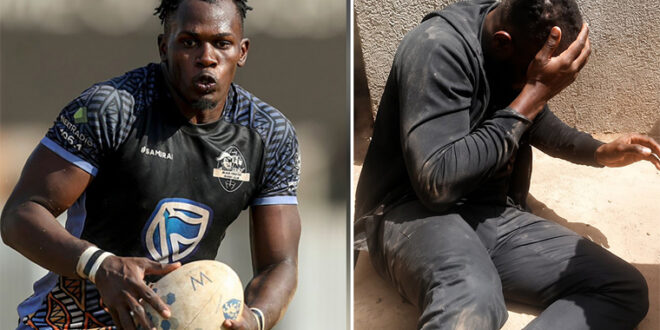
The Uganda Law Society (ULS) has called for urgent national action to address the growing threat of mob violence following the death of national rugby player Sydney Gongodyo, whose killing sparked a wide-ranging discussion on lawlessness, justice and community responsibility.
During the 19th Radical New Bar (RNB) Live public engagement held at the Uganda Law Society headquarters in Kololo on Thursday, lawyers, police officers, sports administrators and members of the public gathered for a national conversation on the root causes of mob violence and possible solutions to the growing phenomenon.
The event also served as a memorial for Gongodyo, a national rugby player who died following what police have described as an alleged mob attack.
Participants observed a moment of silence in honour of the player, whose death has sent shockwaves through the rugby fraternity and the wider public.
Speaking during the discussion, Advocate Edwin Buluma Wabwire, a Senior Associate at KATS Advocates, warned that mob violence had become a threat to every Ugandan regardless of social status or profession.
He noted that if an advocate could lose his life under similar circumstances in 2019 and a national rugby player could be killed in 2026, then anyone could easily become a victim.
Wabwire said the death of Gongodyo reflected a disturbing trend in which citizens increasingly take the law into their own hands instead of allowing courts and law enforcement agencies to perform their constitutional duties.
He revealed that Uganda Law Society President Isaac Ssemakadde, who is currently outside the country, had written to the Uganda Rugby Union conveying condolences and condemning the killing.
According to Wabwire, Ssemakadde warned that crime can be contagious and, if not effectively addressed, could push society towards anarchy.
The lawyer argued that Gongodyo was denied the fundamental protections guaranteed under the Constitution, including the presumption of innocence, the right to a fair hearing and protection from cruel, inhuman and degrading treatment.
He cited accounts indicating that the rugby player had pleaded that the incident was a misunderstanding before he was attacked.
Wabwire questioned why individuals chose to assume the role of judges and executioners instead of allowing the justice system to determine the facts.
He commended police for making arrests and expressed hope that justice would be delivered swiftly not only for Gongodyo but also for other victims of mob violence.
Filmmaker Christopher Mogal Muchwa, who had previously interviewed Gongodyo and documented parts of his rugby career, reflected on the player’s life and the lessons society could learn from his death.
Muchwa said many people only knew Gongodyo as a rugby player and may never have had the opportunity to understand the person behind the sporting achievements.
He noted that one of the challenges facing sports personalities outside football is limited public visibility, suggesting that many people who participated in the attack may not even have known they were assaulting a national athlete.
He urged Ugandans to become more involved in their communities and to invest in telling the stories of people around them before tragedy strikes.
Muchwa also raised concerns about rising levels of anger and intolerance within society, warning that responding to mistakes with violence only worsens existing problems.
He revealed that the Stanbic Black Pirates Rugby Club had begun producing a one-hour documentary on Gongodyo’s life to preserve his legacy and help the public understand his contributions both on and off the field.
The discussion also heard from Senior Superintendent of Police Donald Muhwezi, the Chief Liaison Officer for Kampala Metropolitan Police, who represented the Inspector General of Police.
Muhwezi challenged the commonly used term “mob justice,” arguing that such incidents should instead be described as mob violence or mob injustice because they fundamentally violate the principles of justice.
He described mob violence as a situation where individuals abandon lawful procedures and unlawfully punish people they suspect of wrongdoing.
According to Muhwezi, participants in such incidents often act as investigators, prosecutors, judges and executioners within a matter of minutes.
Police statistics presented during the discussion showed that Uganda recorded approximately 950 cases of mob violence in the past year, down from 1,016 cases registered in 2024.
Muhwezi said the northern, eastern and western regions continued to record some of the highest numbers of such incidents.
He noted that victims are often accused of crimes ranging from theft to witchcraft before suffering assault, lynching or destruction of property.
The police officer warned that mob violence not only violates constitutional rights but also undermines criminal investigations.
He explained that when suspects are attacked or killed, crucial evidence is frequently destroyed, making it more difficult for investigators to identify accomplices, recover stolen property or secure convictions against actual offenders.
Muhwezi called upon political leaders, religious leaders, parents and community structures to take a more active role in discouraging mob violence.
Meanwhile, Stanbic Black Pirates Rugby Football Club chairman Daniel Canowira praised police for their swift response following Gongodyo’s death and acknowledged support from the Uganda Rugby Union, Parliament, government agencies and the wider rugby community.
Canowira revealed that the Ministry of Education and Sports became actively involved shortly after the incident while Parliament and senior government leaders publicly condemned the killing.
However, he said the tragedy raised uncomfortable questions about societal attitudes towards violence.
Canowira expressed concern that despite the prolonged nature of the attack, numerous bystanders reportedly watched without intervening or contacting authorities.
He argued that society must confront its collective responsibility in preventing such incidents and called on Ugandans to become more willing to protect one another regardless of personal relationships.
Drawing on religious teachings, he urged citizens to embrace compassion, responsibility and community solidarity.
“We must become our brother’s keeper,” he said.
The memorial and national conversation came as police investigations into Gongodyo’s death continued.
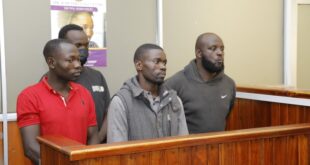
By Wednesday evening, police had arrested Henry Kabugo, a 21-year-old boda boda rider, bringing the number of suspects detained in connection with the killing to 11.
As investigations proceed, participants at the Uganda Law Society event agreed that Gongodyo’s death should serve as a wake-up call for the country to address the root causes of mob violence and strengthen public confidence in the formal justice system.
For many attendees, the conversation was not only about remembering a fallen rugby star but also about confronting a growing culture of lawlessness that threatens the rights and safety of all Ugandans. (For comments on this story, get back to us on 0705579994 [WhatsApp line], 0779411734 & 041 4674611 or email us at mulengeranews@gmail.com).
Post Views: 841
, https://mulengeranews.com/uls-leads-national-debate-on-mob-violence-as-rugby-star-gongodyo-is-remembered/