 pressug.com News 24 7

Related Articles



Viewers: 90,006
By Spy Uganda
The United States and Iran have signed an initial peace agreement aimed at ending months of conflict that has rattled global energy markets and heightened fears of a broader regional war, with both sides committing to immediate ceasefire measures while leaving key disputes over Tehran’s nuclear programme unresolved.
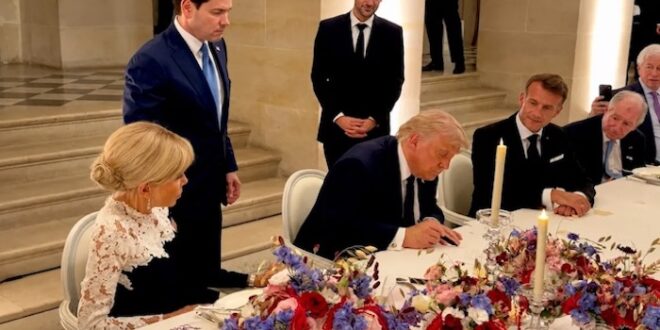
The memorandum of understanding, signed by US President Donald Trump during the G7 summit in France and later endorsed by Iranian President Masoud Pezeshkian in Tehran, took effect immediately and outlines a framework for negotiating a comprehensive peace agreement within 60 days.
The deal includes the reopening of the strategically vital Strait of Hormuz, the lifting of all US sanctions on Iran, and the establishment of a proposed $300 billion reconstruction framework intended to support Iran’s post-war recovery.
Despite the breakthrough, the agreement postpones final decisions on Iran’s nuclear programme — the issue that Washington cited as the central justification for launching military action earlier this year.
Under the terms of the accord, both countries pledged to continue negotiations for up to 60 days, with the possibility of an extension if mutually agreed.
“I didn’t want to see economic catastrophe,” Trump told reporters at the G7 summit in the French resort town of Evian-les-Bains. “If you kept this going, that could have happened.”
The US president argued that the agreement would help stabilize global markets and prevent further economic disruption caused by the conflict, which has driven up oil prices and fuelled inflation concerns worldwide.
A central provision of the agreement states that Iran reaffirms it will not pursue or develop nuclear weapons. The memorandum also provides for Iran’s stockpile of enriched uranium to be diluted under the supervision of the International Atomic Energy Agency (IAEA), the United Nations nuclear watchdog.
However, the deal stops short of fully resolving the future of Iran’s nuclear infrastructure, leaving negotiators with a narrow window to reach a more comprehensive settlement.
Trump also issued a stark warning that military action could resume if negotiations collapse.
“If no final deal emerges, we will bomb the hell out of Iran,” he said.
One of the most significant components of the agreement is the reopening of the Strait of Hormuz, the narrow waterway through which roughly one-fifth of the world’s oil and liquefied natural gas supplies normally pass.
Iran had effectively restricted movement through the strait during the conflict, contributing to sharp increases in global energy prices and disrupting international trade flows.
Under the new agreement, vessels will be permitted to transit the waterway free of charge for an initial 60-day period.
However, senior Iranian officials signaled that the arrangement may be temporary.
Iranian parliamentary speaker Mohammad Bagher Ghalibaf, who played a key role in the negotiations, said the waterway would not necessarily return to pre-war conditions and suggested that shipping charges could be introduced after the temporary arrangement expires.
Although both governments hailed the agreement as a step toward ending hostilities, senior officials on both sides acknowledged that mistrust remains high.
Ghalibaf warned that Iran remained prepared to respond militarily if tensions flare again.
“Our finger is on the trigger,” he told Iranian state television. “If the enemy does not understand the language of logic, we will enter again with the language of power.”
The war began on February 28 when the United States and Israel launched coordinated military operations against Iran. The opening attacks reportedly killed Supreme Leader Ayatollah Ali Khamenei and several senior military commanders, triggering a conflict that quickly expanded across the region.
The agreement’s first clause calls for the “immediate and permanent termination of military operations on all fronts, including in Lebanon.”
However, uncertainty remains over implementation, particularly regarding Israel’s military campaign against Hezbollah.
Israeli forces continued operations against Hezbollah targets on Wednesday, and officials in Jerusalem have not publicly committed to withdrawing troops from Lebanon.
Trump appeared to acknowledge growing concerns about Israel’s role in sustaining regional tensions, publicly urging Israeli Prime Minister Benjamin Netanyahu to show greater restraint.
“He’s a good man, but he could do with a little softer touch,” Trump said. “You don’t have to knock down a building every time someone walks into it that’s from Hezbollah.”
The agreement has already sparked fierce criticism from both Republicans and Democrats in the United States.
Republican Senator Ted Cruz questioned the proposed reconstruction framework, warning against any arrangement that could indirectly benefit Iran’s leadership.
“Giving billions of dollars to theocratic lunatics who want to murder us is not a good idea,” Cruz told reporters.
Republican Senator Bill Cassidy described the agreement as “the worst foreign policy blunder in decades.”
Democrats were equally critical.
Senator Jeanne Shaheen argued that the proposal failed to address Iran’s support for regional armed groups and did not adequately limit Tehran’s missile capabilities.
“It’s not accomplished any of the aims that President Trump laid out at the start of the war,” she said.
The White House has denied that American taxpayers would finance Iran’s reconstruction directly, insisting that the framework is intended to facilitate investment and economic activity from international partners if Tehran complies with the agreement.
Financial markets reacted positively to news of the breakthrough, with oil prices easing modestly in early trading after weeks of volatility.
Brent crude fell around 1% following the announcement, though prices remained significantly above pre-war levels, reflecting continued uncertainty over the durability of the accord.
For now, the agreement offers the strongest indication yet that both Washington and Tehran are seeking an exit from a conflict that has reshaped the Middle East and shaken the global economy. But with crucial nuclear issues still unresolved and deep distrust lingering on both sides, the next 60 days are likely to determine whether the deal becomes a lasting peace or merely a temporary pause in hostilities.
, https://www.spyuganda.com/finally-us-iran-sign-initial-peace-deal-set-60-day-deadline-for-nuclear-agreement/
