 pressug.com News 24 7

Related Articles


Uganda is officially spicing up its tourism menu—and this time, it’s not just about gorillas, lions, and game drives.
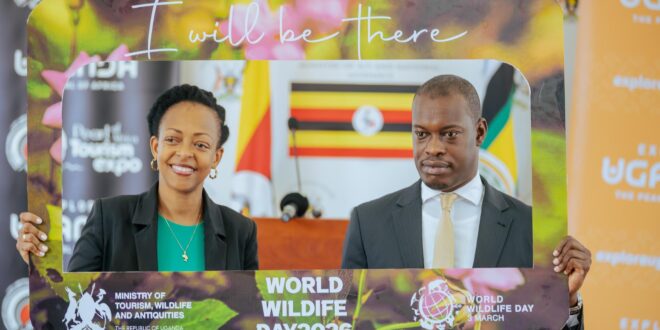
At a lively launch held on February 5 at the Uganda Media Centre in Kampala, the country kicked off national preparations for World Wildlife Day 2026 with a bold, fresh idea: herbal and medicinal tourism as Uganda’s next big money spinner.
The event, organized with the Uganda Tourism Board (UTB) at the heart of it, set the tone for the March 3 global celebrations, which will run under the UN theme:
“Medicinal and Aromatic Plants: Conserving Health, Heritage and Livelihoods.”
And if there was one clear message from the day—it’s that Uganda wants visitors to leave not just with photos, but maybe a little healing too.
UTB CEO Juliana Kagwa used the platform to announce a strategic pivot, saying Uganda is intentionally moving beyond traditional wildlife safaris into deeper, culture-rich experiences rooted in nature and heritage.
With a cheeky comparison to Thailand—famous for blending culture, education, and wellness tourism—Kagwa said Uganda is sitting on a goldmine.
“We can leverage our natural resources to create distinctive herbal and medicinal tourism experiences that offer authentic, sustainable value to visitors while generating economic benefits for local communities,” Kagwa said.
Thanks to its equatorial location, massive biodiversity, and centuries-old herbal knowledge, Uganda is now eyeing tourists who want to learn, heal, and connect—not just sightsee.
Presiding over the launch, Minister of State for Tourism, Wildlife and Antiquities Hon. Martin Mugarra called on Ugandans to show up in big numbers.
“I call upon all Ugandans to join the celebrations on March 3, 2026, and to actively support the protection of these vital plant resources that sustain our biodiversity, culture, and community wellbeing,” he said.
The theme, he noted, shines a spotlight on medicinal and aromatic plants—not just as cures, but as cultural treasures and sources of income—while warning against threats like overharvesting, habitat loss, and illegal trade.
Not to be left behind, Uganda Wildlife Authority (UWA) is also switching gears.
Executive Director Dr. James Musinguzi revealed that UWA is diversifying tourism products to match growing global interest in natural medicine.
“UWA is diversifying tourism products including botanical modern trails,” Musinguzi announced.
Translation? Visitors to conservation areas may soon find themselves walking guided medicinal plant trails, learning which leaf treats what—and why protecting them matters.
The launch wasn’t all speeches and strategy. Officials also unveiled the official kits for the Uganda Wildlife Half Marathon 2026, set for March 1, with proceeds supporting children of fallen wildlife rangers.
Additional build-up activities include conservation-themed school and university competitions covering music, dance, and drama; the National Crane Festival; Conservation Media Awards; and a dedicated National Conference on wildlife and conservation. The grand finale will take place on March 3, 2026, at the lush Entebbe Botanical Gardens—a fitting venue for a celebration centred on plants, people, and planet.
World Wildlife Day, established by the UN in 2013, marks the signing of CITES on March 3, 1973. Uganda’s 2026 programme aligns conservation with opportunity—using wildlife protection to unlock a tourism niche few African countries have tapped.
If the plan works, future tourists won’t just come to see Uganda’s wildlife—they’ll come to feel better because of it.
From gorillas to green medicine, Uganda is betting big on nature’s pharmacy—and making conservation look fun while at it.