 pressug.com News 24 7

Related Articles



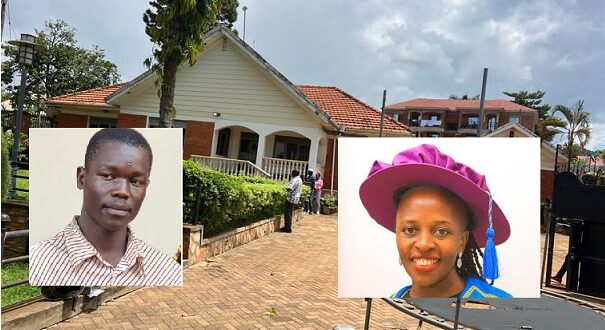
The tragic murder of Pamela Tumwebaze, a dean of students at Uganda Christian University (UCU), continues to rattle the country and beyond. What first appeared to be a straightforward arrest of a key suspect is now turning into a web of contradictions, contested motives, and uncomfortable questions.
On 14 February 2025, a joint security task team investigating Pamela’s killing arrested Taewaiko Dak Hussein, a former shamba boy at her home. Authorities say he has reportedly confessed.
Though he was remanded to prison today, 20th Feb on murder and theft charges, one thing is becoming clear: the confession may not be the end of the story. It may just be the beginning with the nation urging investigators to leave no stone unturned.
THE “UNPAID WAGES” — FACT OR FICTION?
Several media reports have quickly framed the alleged motive as unpaid wages. According to that version, Taewaiko killed his former employer after she allegedly withheld his salary over stolen kids’ two bicycles.
It’s a simple narrative. Too simple, some say.
People who lived in Pamela’s home and worked closely with her are pushing back hard. They insist that the “unpaid salary” story does not align with the facts they know.
And they are asking investigators to dig deeper.
Because when timelines are examined closely, the story starts to wobble.
Micheline, a Congolese UCU student who lived with Pamela for nearly two years, shared the home with the suspect. According to her, Taewaiko started working around July 2025 on a salary of UGX 130,000 — not UGX 150,000 as some reports claim.
Due to his diligence and his ability to manage the shamba effectively, his pay was later increased to UGX 200,000.
She remembers him expressing long-term plans.
“He often said he hoped to work for at least five years to save money,” she recalls.
According to those in the home, Taewaiko left in December 2025. Not because of a dispute. Not after a confrontation. He reportedly simply informed Pamela he would not return after Christmas break for personal reasons.
That’s critical. Because while he was away — after leaving employment — a first bicycle went missing. Then, on 31 December, a second could also not be traced.
Here’s where it gets even stranger.
Daniel, another worker at the residence at the time, says signs of forced entry were discovered in the servants’ quarters on the night of 31 December 2025. The intruder reportedly took a bicycle and several small items Taewaiko had left behind — including a phone charger.
His national identity card was also found at the scene.
Pamela formally reported the theft to police on 2 January 2026.
The timeline matters.
Because both bicycles were stolen after Taewaiko had already left employment.
So how could the theft justify withholding wages — if he was no longer working there?
Those familiar with Pamela’s household insist she paid workers promptly. Sometimes in cash.
Sometimes via mobile money.
Daniel recalls accompanying Taewaiko to an MTN service center in November after his phone was blocked. He says the salary that month was paid via mobile money.
Micheline confirms he was paid monthly. She cannot independently confirm whether he received his December salary because she travelled to Congo early for Christmas.
But she says one thing with certainty: she strongly doubts Pamela would withhold wages.
“She was kind, ethical, and fair in her treatment of people,” those close to her insist.
Was there any documented complaint about unpaid salary? Any message? Any demand?
Any confrontation? Or is the “salary grievance” narrative convenient — because it is easy to understand?
THE NAME GAME: WHO IS “SAM”?
According to Micheline, when Taewaiko was hired, he introduced himself as “Sam.”
So when news broke of an arrest — under the name Taewaiko Dak Hussein — those in the household were stunned. Why the different name? Was “Sam” an alias? A nickname? Or something more deliberate?
For those who lived under the same roof, the inconsistency raises questions about credibility. If the identity shifts, what about the narrative?
DID HE ACT ALONE?
Another critical question investigators must answer: Was Taewaiko acting alone?
His reported account allegedly conflicts with the understanding of Pamela’s family and with statements from others who lived or worked in the home. That gap is not minor. It is significant.
Crimes of this magnitude rarely sit comfortably in a single-person explanation when timelines and testimonies clash.
If there are inconsistencies between his version and what household members say, then those inconsistencies must be interrogated thoroughly.
Were there other actors? Was someone else present? Was there prior planning? Was there influence? Or is there information not yet public?
CONSPIRACY THEORIES CLOUD THE WATERS
As if the case wasn’t complex enough, online conspiracy theories have swirled.
One claims Pamela remained married for career advancement reasons.
Colleagues at UCU have dismissed this outright.
They say Pamela had openly informed her supervisors about her marriage separation and continued to rise through the ranks based on merit. She was promoted several times and ultimately became Director of Students Affairs.
She had also communicated her intention to formalize a divorce and remarry — with full support from her superiors.
At no point, colleagues insist, was her career progression tied to her marital status.
Pamela was married to city lawyer Alex Matsiko. According to her friends, she had been pursuing him for a divorce for over a year, with the process reportedly dragging because of him.
But here’s the critical question: What relevance does this have to the murder?
Is it something investigators must examine?
At this stage, there is no public evidence linking marital issues to the crime. Yet speculation continues.
THE CONFESSION — BUT WHAT MOTIVE?
Authorities say Taewaiko has reportedly confessed. But confession alone does not close a case. Why? Because motive matters. Sequence matters. Corroboration matters.
If the alleged motive is unpaid wages — and the timeline contradicts that — then investigators must reconcile the discrepancy.
If the suspect introduced himself under a different name, that needs explanation.
If his belongings were removed during a break-in after he had left employment, that requires context.
A confession without a clear, consistent motive leaves questions. And questions demand answers.
Until those questions are answered conclusively, the case remains unsettling.
Those who knew Pamela are not seeking sensationalism. They are demanding thoroughness.
They want investigators to: Interview everyone who lived in the home. Interview the suspects’ friends. Cross-check timelines carefully. Examine whether the suspect’s story aligns with physical evidence. Determine whether he acted alone or with others.
Because for them, this is not a headline. It is the loss of a colleague. A mentor. A mother figure.
A friend.
JUSTICE OR A RUSH TO CLOSE?
There is always pressure in high-profile murders — now like this involving a senior academic at a respected institution like UCU. But justice is not about speed. It is about certainty.
As investigations continue, those close to Pamela Tumwebaze are calling for careful scrutiny of every claim and a thorough examination of all possible actors involved.
Because in a case layered with contradictions, half-answers are not enough.
And until every inconsistency is addressed, the murder of UCU’s dean remains a story with chapters still unwritten.
Who are ‘persons of interest’ investigators must interview? These will be revealed in our subsequent publication.