 pressug.com News 24 7

Related Articles

The Bank of Uganda has joined a growing list of stakeholders opposing the proposed Protection of Sovereignty Bill, 2026, warning that it could have far-reaching consequences for the country’s economy.
The Bill, which seeks to regulate foreign funding by capping unauthorised inflows from foreign entities or their agents at Shs 400 million, beyond which ministerial approval would be required, has drawn criticism from a wide range of actors outside Cabinet and the ruling National Resistance Movement (NRM).
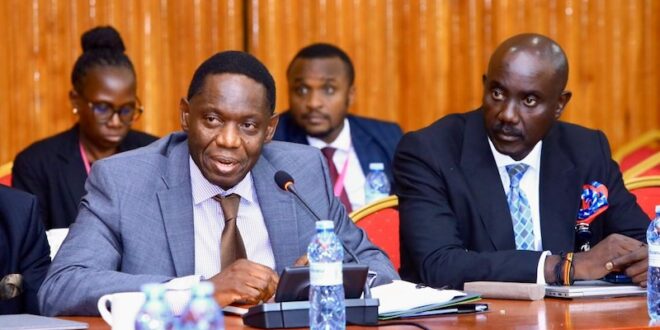
Appearing before a joint committee on defence and internal affairs and legal and parliamentary affairs on Tuesday, Bank of Uganda governor Michael Atingi-Ego cautioned that restricting financial inflows could undermine Uganda’s external reserves and destabilise the broader economy.
“A country without reserves is not sovereign. The potential of this Bill to destabilize Uganda’s balance of payments is our primary concern as a central bank,” he said.
“For example, last financial year, the overall balance of payments surplus was $1.5 billion. That’s how we were able to increase our reserve coverage by $1.5 billion. Today, as we speak, our reserves are close to $6 billion. Why? Because these inflows have been coming in,” he said.
“The moment you tamper with these inflows here, we risk running down our reserves, and that is economic disaster for a country,” he added.
Atingi-Ego warned that the Bill, in its current form, could disrupt price stability by triggering depreciation of the Uganda shilling, which would in turn raise the cost of imports and fuel inflation.
“Our inflation is going to increase via the depreciation of the exchange rate,” he explained. “That means we will either have to tighten monetary policy further to contain inflation, or allow inflation to rise above the 5 per cent target if we avoid raising interest rates.”
He noted that Uganda’s current relatively low inflation, hovering around 3 per cent could be eroded if the currency weakens due to reduced foreign inflows.
Wider backlash
The central bank’s position adds to a wave of criticism from civil society, legal experts and development partners, who have raised concerns about the Bill’s broader implications.
The Uganda Law Society has warned that the proposed law could infringe on constitutional freedoms, particularly the rights to association and access to funding, arguing that excessive restrictions risk undermining civic space.
Similarly, the Civil Society Budget Advocacy Group (CSBAG) cautioned that limiting foreign financial inflows could disrupt development financing, especially for programmes in health, education and governance that rely heavily on external support.
International observers, including Human Rights Watch, have also expressed concern that the Bill could be used to curtail the operations of non-governmental organisations and weaken accountability mechanisms.
Telecoms have also indicated that the bill poses an operational and growth risk, especially for mobile money and foreign-funded digital transactions.
Within parliament, some opposition legislators have criticised the proposal as economically risky and politically motivated, warning that it could deter foreign direct investment and reduce donor confidence at a time when Uganda is seeking to expand its economic base.
Economists note that foreign exchange inflows, including investments, remittances and development assistance, play a central role in stabilising the exchange rate, supporting reserves and sustaining economic growth. Any abrupt restrictions, they warn, could trigger currency volatility and strain public finances.
Related
, https://observer.ug/news/bank-of-uganda-also-rejects-sovereignty-bill/