 pressug.com News 24 7

Related Articles

Viewers: 90,001
By Spy Uganda
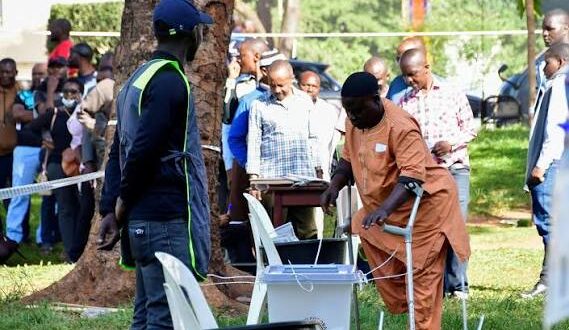
Ugandans will head to the polls later this month to elect their Local Council One (LC1) and Local Council Two (LC2) leaders, with the government confirming 28 July 2026 and 10 August 2026 as the respective election dates.
The announcement was made by the State Minister for Local Government, Justine Nameere, while presenting a ministerial statement to Parliament on Wednesday.
Nameere said the tenure of the current LC1 and LC2 office bearers, which has been extended several times over the years, was again extended following the expiry of their term on 28 June 2026. She explained that the leaders will remain in office until the newly elected officials are sworn in after a formal handover process.
She noted that the extension is provided for under Regulation 11A of the Local Government Councils Regulations, which allows the tenure of local council leaders to be extended for up to 180 days.
To ensure a successful electoral process, Nameere said the Electoral Commission has intensified nationwide voter sensitisation campaigns through print, electronic and social media platforms. However, she acknowledged that more public awareness is still needed to encourage greater voter participation.
“The Ministry of Local Government is working closely with the Electoral Commission on an effective mobilisation strategy in the remaining days to ensure voters turn up in large numbers to elect their leaders,” she said.
The minister also clarified the eligibility requirements for voters, emphasizing that only Ugandan citizens who were at least 18 years old at the time of voter registration and are residents of the village where they registered will be allowed to participate in the elections.
Eligible voters, she said, must present either a National Identification Card (National ID), voter number or application ID number to cast their ballot.
Nameere further reminded the public that, in accordance with Section 123(2) of the Local Governments Act, Cap. 138, the election of LC1 chairpersons at village or cell level, as well as LC2 chairpersons at parish or ward level, will be conducted using Uganda’s traditional lining-up voting system, where voters queue behind their preferred candidate, the candidate’s representative, portrait or symbol.
During the parliamentary debate, the Shadow Minister for Local Government, Patrick Okello, urged the government to ensure that police officers deployed to provide security during the elections are adequately facilitated.
He recalled complaints from officers during previous elections, when some took to social media alleging delays in receiving their allowances.
“In the last elections, police constables were all over social media demanding unpaid money. These are the very people who are going to manage security during these difficult LC1 and LC2 elections. If they are not properly facilitated, it could demoralise them and create gaps in the electoral process,” Okello warned.
Meanwhile, Deputy Speaker Thomas Tayebwa directed the Minister of Justice and Constitutional Affairs to consult with the Electoral Commission and provide Parliament with a comprehensive update on the electoral programme.
Tayebwa noted that although the Electoral Commission conducts the elections independently, it falls under the supervision of the Ministry of Justice, making it important for Parliament to receive regular updates on the preparedness of the electoral process.
The upcoming LC1 and LC2 elections are expected to be closely watched, as they will usher in new grassroots leaders responsible for resolving community disputes, mobilising local development initiatives and serving as the first point of contact between citizens and government.
, https://www.spyuganda.com/electoral-countdown-begins-as-govt-confirms-lc1-lc2-poll-dates/