 pressug.com News 24 7

Related Articles



Viewers: 50,002
By Spy Uganda
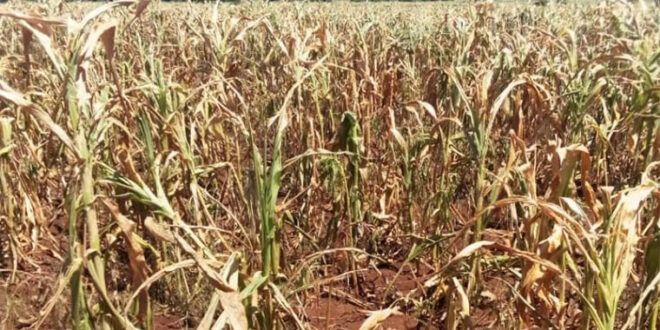
Uganda is facing mounting concerns over a worsening food security crisis as a prolonged dry spell that has persisted since April 2026 continues to devastate crops, livestock and water sources across several parts of the country.
The drought has left thousands of households struggling to access food, with the hardest-hit regions already reporting severe shortages. Government officials have acknowledged the growing crisis, warning that urgent intervention is needed to prevent further humanitarian suffering.
Speaking during the Prime Minister’s Question Time in Parliament last week, Prime Minister Robinah Nabbanja confirmed that Karamoja remains the epicentre of the food emergency after receiving virtually no rainfall for months.
“We already have a problem of famine in Karamoja because since April they have not seen a drop of rain. We are currently handling Karamoja and the neighbouring districts. A Cabinet paper has already been prepared and will be discussed. Now that I have received additional information from Members, I will inform Cabinet that the problem may be much bigger,” Nabbanja said.
Her remarks came amid growing reports that prolonged drought has severely affected livelihoods, particularly in Northern and Northeastern Uganda, where crop failures and livestock losses are becoming increasingly common.
Leaders from affected districts warned that some communities are already experiencing hunger, with fears that the situation could deteriorate if rains continue to delay.
The Office of the Prime Minister (OPM) has already begun distributing emergency food aid to the worst-hit areas. On July 8, relief supplies comprising 13 tonnes of maize flour and nine tonnes of beans were delivered to Loduku and Loyoru sub-counties in Kaabong District, with additional consignments earmarked for Kaabong, Kotido, Amudat, Napak and Moroto districts.
Government says the emergency response is intended to cushion vulnerable households as longer-term interventions are considered.
The current dry spell has also revived painful memories of previous drought-induced disasters. According to the Uganda Human Rights Commission’s 2022 Annual Report, prolonged drought contributed to the deaths of 2,255 people across Kotido, Moroto, Kaabong and Napak districts, highlighting the devastating consequences of delayed responses to food insecurity.
Beyond food shortages, the drought is exposing deeper weaknesses in Uganda’s agricultural system.
While families in Karamoja and parts of Northern Uganda struggle to find enough food, farmers in western Uganda are experiencing bumper banana harvests that they cannot sell. The unusually high temperatures have accelerated ripening, leaving many producers with more matooke than the market can absorb.
Prime Minister Nabbanja noted that some farmers have resorted to feeding bananas to livestock because they cannot consume or sell the produce quickly enough.
The contrasting realities have renewed calls for improved food storage facilities, processing plants and better transport networks to move food from surplus-producing regions to areas facing shortages.
Agricultural experts have long argued that strengthening storage infrastructure and market linkages would help reduce food waste while improving food availability during periods of climate stress.
The dry conditions are also affecting livestock production. Farmers in Uganda’s cattle corridor are grappling with water shortages while outbreaks of Foot and Mouth Disease (FMD) continue to threaten herds and restrict livestock trade.
Government says it is working with farmers to increase vaccine coverage through a cost-sharing arrangement aimed at preventing further disease outbreaks.
Climate experts warn that the current drought reflects Uganda’s increasing vulnerability to extreme weather events linked to climate change.
Ironically, while much of northern Uganda battles prolonged drought, weather forecasts indicate that parts of eastern Uganda could soon experience heavy rainfall capable of triggering landslides in vulnerable mountainous areas.
This contrast underscores the growing challenge facing the country as climate extremes become more frequent and unpredictable.
Although emergency food relief is providing immediate assistance, experts say lasting solutions will require significant investment in irrigation, water harvesting, climate-smart agriculture, storage facilities, disaster preparedness and stronger food distribution systems.
With millions of Ugandans depending on rain-fed agriculture for both food and income, the ongoing dry spell serves as another stark reminder of the need to strengthen the country’s resilience to climate change before seasonal shocks develop into full-scale humanitarian crises.
, https://www.spyuganda.com/food-crisis-looms-as-prolonged-dry-spell-ravages-several-parts-of-uganda/