 pressug.com News 24 7

Related Articles


Viewers: 50,009
By Spy Uganda
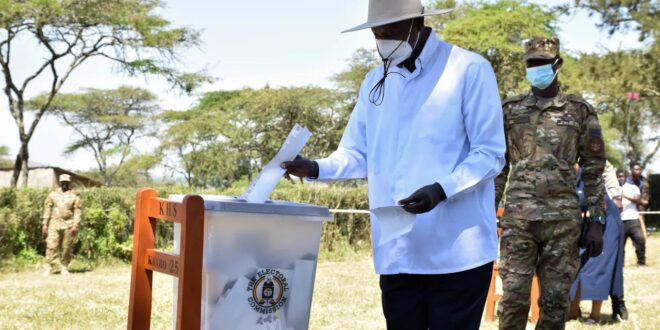
Parliament has urged the government to declare Thursday, July 23, 2026, a public holiday to allow Ugandans, particularly women and working citizens, to fully participate in the upcoming Women Council elections, as the country prepares for the long-awaited Local Council (LCI and LCII) polls.
The proposal dominated debate during a plenary sitting on July 9, where legislators argued that a public holiday would boost voter turnout and strengthen grassroots democracy by enabling citizens to travel to their villages and cast their votes.
Responding to lawmakers, Deputy Attorney General Jackson Kafuuzi acknowledged the importance of the proposal but clarified that the Ministry of Justice and Constitutional Affairs does not have the authority to declare public holidays.
“The suggestion that July 23 should be made a public holiday because it is designated for Women Council elections is one I cannot implement. Through the Prime Minister, I will present it to Cabinet for consideration and await its decision,” Kafuuzi told Parliament.
Under Uganda’s Public Holidays Act, the declaration of public holidays is an executive function handled by Cabinet, while Parliament exercises oversight by scrutinising government preparedness for national processes, including elections.
Several Members of Parliament argued that the Women Council elections deserve special recognition because women make up more than half of Uganda’s population and should be given adequate opportunity to elect their leaders.
Wakiso District Woman MP Ethel Naluyima said many working Ugandans would struggle to travel to their registered villages unless polling day is declared a holiday.
“Women constitute over 51 percent of Uganda’s population. They deserve a day dedicated to electing their leaders. We also need to consider working Ugandans who may not have enough time to travel home and vote,” Naluyima said.
The legislators argued that improving participation at the grassroots would strengthen democratic governance since Local Council leaders serve as the first point of contact between citizens and government.
The parliamentary debate also highlighted the poor working conditions under which many Local Council leaders operate.
Rukiga District Woman MP Sylvia Alinaitwe questioned why village leaders continue to run government business from their homes or under trees despite their critical role in implementing government programmes.
“Most LC1 offices operate from people’s homes or even under trees. Isn’t it time government provided funds to construct proper offices or pay rent?” she asked.
Lawmakers said successive governments have continued assigning village leaders additional administrative responsibilities without providing adequate infrastructure or logistical support.
Kafuuzi also outlined key arrangements for the forthcoming elections, revealing that aspiring candidates for Local Council positions will not pay nomination fees and will not be required to present academic qualifications.
He said the move is intended to promote inclusive participation and ensure grassroots leadership remains accessible to all eligible citizens.
The Electoral Commission has also announced facilitation for election officials.
Sub-county Election Officials will receive UGX 546,000 per month for two months, Parish Election Officials UGX 288,125 monthly, while Village Election Officials will earn UGX 10,000 per day during voter registration and display of the voters’ register.
On polling day, Presiding Officers will receive UGX 30,000, while Polling Assistants and Election Orderlies will each be paid UGX 20,000.
Despite the government’s assurances, legislators raised concerns about the Electoral Commission’s readiness.
Arua District Woman MP Lillian Paparu questioned reports that the Commission intends to rely on election officials trained during previous electoral exercises without conducting fresh training.
She warned that many previously trained officials may have relocated, potentially affecting the smooth conduct of the elections.
“If new officials are recruited without adequate training, how will they effectively manage the election process?” Paparu asked.
Security during the elections also emerged as a major concern.
Katikamu South MP Hassan Kirumira cautioned that local elections have historically been marked by violence, voter intimidation and disruption of polling stations.
“Every election period comes with violence. We have seen polling stations disrupted and elections fail to take place in some areas. What security measures have been put in place to guarantee peaceful elections?” Kirumira asked.
The Local Council and Women Council elections form part of the Electoral Commission’s roadmap for Uganda’s 2026–2031 electoral cycle and are expected to play a crucial role in strengthening the country’s decentralised system of governance.
As Parliament continues pressing the government to remove barriers to voter participation, attention now shifts to Cabinet, which will decide whether July 23 will be declared a public holiday.
Lawmakers maintain that beyond the question of a public holiday, the success of the elections will depend on adequate funding, proper training of election officials, improved welfare for Local Council leaders and sufficient security to guarantee free, fair and peaceful grassroots polls.
, https://www.spyuganda.com/grassroots-elections-mps-call-for-public-holiday-to-increase-voter-participation/