 pressug.com News 24 7

Related Articles



Uganda’s courts delivered a series of significant rulings and developments last week, with decisions that touched on higher education, criminal justice, constitutional rights and public accountability.
At the centre of the week’s proceedings was a landmark High Court ruling ordering Uganda Christian University (UCU) to compensate a law student after finding that the institution had unlawfully refused to recognise academic credits she earned abroad just months before graduation.
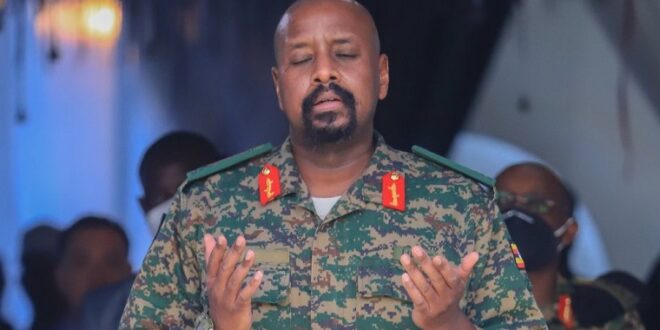
Elsewhere, a defence forensic expert in the high-profile Molly Katanga murder trial conceded he could not determine the position of the deceased at the moment he was shot, while the High Court directed Chief of Defence Forces Gen Muhoozi Kainerugaba to respond within seven days to a suit brought by Dr Kizza Besigye.
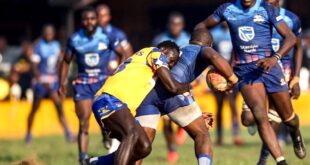
In Kampala, four men were also remanded over the mob killing of Rugby Cranes player Sydney Gyabi Gongodyo.
UCU ORDERED TO PAY STUDENT SHS 100 MILLION
The most consequential judgment came in favour of Samantha Mwesigye, a Bachelor of Laws student who challenged UCU after the university attempted to reverse an academic decision that had shaped her entire education.
Mwesigye completed her first year at King’s College London during the 2021/2022 academic year, passing five law modules before transferring to UCU. On August 30, 2022, the university admitted her under a “Transfer of Credits” arrangement, allowing her to continue directly into Semester II of Year One.
For four years, she progressed through the programme without objection. She was vetted and permitted to contest for Guild President, a position that requires students to be in good academic standing, and was even introduced to the Ministry of Justice as a student awaiting graduation.
Then, in January 2026, only months before her expected graduation, the university verbally informed her through the Vice Chancellor and Dean of the School of Law that she would have to complete four additional course units from Semester One and obtain a certificate of equivalence from the National Council for Higher Education.
Mwesigye challenged the decision in court, arguing that it was illegal, irrational and procedurally unfair and that it violated her legitimate expectation that the credits the university had already accepted would remain recognised.
Justice Bernard Namanya agreed. In his ruling, the judge found that UCU could not rely on later explanations to contradict its own admission letter, which had explicitly referred to a transfer of credits.
The court described the university’s conduct as an attempt to reconstruct the circumstances of her admission after the fact. According to the judgment, reversing its position after allowing the student to complete the entire four-year programme was “arbitrary, unjust, and amounts to abuse of power.”
The court declared the decision tainted by irrationality and procedural impropriety, ordered UCU to pay Shs100 million in general damages, plus interest at 25 per cent per year from the date of judgment, and awarded costs to the applicant.
EXPERT COULDN’T DETERMINE KATANGA’S POSITION DURING SHOOTING
Meanwhile, proceedings in the murder trial of Molly Katanga and four co-accused continued to focus on conflicting interpretations of forensic evidence surrounding the death of her husband, Henry Katanga.
Defence witness Dr Sylvester Onzivua acknowledged under cross-examination that he could not determine the position in which the deceased was when the fatal gunshot was fired.
He also confirmed that he had never examined injuries allegedly sustained by Molly Katanga herself, despite those injuries forming part of the defence narrative. Prosecutor Jonathan Muwaganya questioned the methodology behind the expert’s conclusions, emphasising that forensic pathologists ordinarily consider body position, blood patterns, firearm location and the wider crime scene when reconstructing deaths.
Dr Onzivua further admitted that one conclusion regarding blood distribution in the room did not originate from the blood pattern analysis report he had cited, although he maintained his overall opinion that the available evidence was consistent with Henry Katanga having shot himself.
COURT ORDERS GEN. MUHOOZI TO FILE HIS DEFENCE
In another closely watched matter, the High Court directed Gen Muhoozi Kainerugaba to file his defence within seven days in response to an application filed by opposition politician Dr Kizza Besigye.
Justice Emmanuel Baguma ordered all five respondents, including Muhoozi, Col Peter Ahimbisibwe, Lt Col Ephraim Byaruhanga and the Attorney General, to submit their responses by June 18, 2026.
Rejoinders are due by June 25, with the substantive hearing scheduled for June 30. Besigye alleges that posts published by Muhoozi on the social media platform X threatened his life and undermined his constitutional right to a fair trial. Among the statements cited are “We will hang KB on Heroes’ Day” and “Besigye is a dead man walking,” remarks the applicants argue amount to psychological torture, prejudgment and interference with judicial independence.
The application also raises concerns about delays in the treason proceedings and restrictions affecting legal representation and trial preparation. The treason case itself failed to proceed after Besigye and his co-accused, Hajj Obeid Lutale, declined to appear in court, citing unresolved issues involving their legal team.
A prison official advised that clarification should instead be sought from the Commissioner General of Prisons.
RUGBY PLAYER’S KILLERS REMANDED
Elsewhere, the Kampala City Hall Court remanded four men to Luzira Prison over the death of Rugby Cranes player Sydney Gyabi Gongodyo, who allegedly died after being attacked by a mob following accusations that he had attempted to steal a woman’s handbag.
The accused, Obed Mugwisa, Elly Mondoni, Joseph Owino and Henry Kabugo, appeared before Senior Grade One Magistrate Edgar Karakire and were formally charged with murder.
Court documents allege that they, together with others still at large, killed Gongodyo on June 5, 2026, along Upper Naguru East Road in Kampala. Because murder is a capital offence under Ugandan law, the magistrate did not take pleas, explaining that only the High Court has jurisdiction to try such cases.
State prosecutor Grace Akite told the court that investigations remain ongoing and that police continue to pursue additional suspects believed to have participated in the attack.
Taken together, the week’s proceedings offered a vivid snapshot of Uganda’s justice system confronting very different questions: the limits of institutional power, the reliability of forensic evidence, the protection of constitutional rights and accountability for violent crime. In each case, the courts are now being asked to determine not only what happened, but whether the law has been applied fairly and consistently.
Related
, https://observer.ug/news/from-ucu-to-muhoozi-a-week-of-court-drama/