 pressug.com News 24 7

Related Articles
Diaspora’s activists can receive funding easily, unlike activists still in Haiti
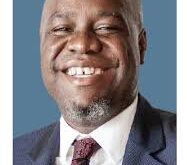
While Haitian human rights organizations are grappling with declining international funding, political instability, and chronic insecurity caused by gangs, grassroots LGBTQ activists in the country are also grappling with a fragmentation of advocacy efforts by members of the diaspora who seek to speak on behalf of Haiti over the voices of those on the island.Dominique X St-Vil is the executive director of the Trans Organization of Haiti (OTRAH)Erasing 76 Crimes spoke to Dominique X St-Vil, director of the Organisation Trans d’Haiti (OTRAH), about how competing interests of the diaspora and those on the ground in Haiti are making it harder to support LGBTQ communities in the country.Erasing 76 Crimes: As the presidential elections scheduled for Aug. 30 (first round) and Dec. 6 (final vote) become increasingly uncertain—with a possible postponement to 2027 due to conflicts between armed gangs and the Haitian National Police— what is the state of LGBT+ organizations on the ground? How have they been affected by the Trump administration’s severe cuts to development aid?St-Vil: On the eve of the International Day Against Homophobia, Biphobia, and Transphobia, coming up on May 17, the reality in Haiti is harsh for everyone, especially for transgender people. (Editor’s note: more than 50% of the population lives in a state of chronic food insecurity, according to the World Food Programme).And many organizations have shut their doors, laying off their employees, while countless activists have left the country to seek refuge elsewhere—in the United States, Canada, or other destinations—in the hope of a brighter future.However, while I expected Haitian organizations to demonstrate ingenuity in pulling the country out of this rut, what we are witnessing is a veritable fragmentation.Erasing 76 Crimes: What do you mean by fragmentation?St-Vil: We are witnessing the extraterritorialization of Haitian advocacy bodies, following the recent emigration of many human rights defenders.
Specifically, activists recently established a new organization in Canada, where they have come together under the name Haitian Civil Society in Canada, which is the official title of their association.But for me, living in Port-au-Prince, Haitian civil society can only exist here; there cannot be a second one elsewhere. Ultimately, civil society is a geographical reality; it is part of daily life, with specific spheres of action for associations, and it cannot be virtual or exist in an anthropological reality other than that of Haiti.In reality, those who have left, abandoned, or fled the country face a host of challenges: learning English, adjusting to the winter season, difficulties in obtaining equivalency for their diplomas, struggles to have their professional experience recognized in a new country, a lack of friends, and cultural differences. And there is no shortage of examples.So, in my view, when we start talking about civil society outside of Haiti, it raises the question of shifting decision-making bodies outside the country, which ultimately serves to further weaken Haitian society and the activists who have chosen to stay behind out of patriotism.Erasing 76 Crimes: This situation is reminiscent of that of the Total Respect/Tjenbé Rèd Federation, which, based in Paris, claimed to speak on behalf of LGBT+ people living in the French overseas territories and within the diasporas established in the Paris region, and in doing so, secured funding, thereby preventing the emergence of local associations. Is that what’s happening here?See Also
St-Vil: You can’t speak on behalf of people from thousands of miles away from Haiti—it doesn’t make sense, especially since these are people who won’t be returning to build their lives here and who are permanently settled in Canada.However, I won’t refer to them as exiles, because they aren’t people who were driven out of the country at gunpoint. On the other hand, these are activists who are very well-informed about the reality of how funds are distributed among organizations, and I fear we are seeing people who no longer live in Haiti but who assume the right to receive funding on our behalf, leveraging their proximity to North American donors in Canada.Currently, there is already a civil society forum bringing together actors working in the fields of health, the fight against HIV, tuberculosis, and malaria. Therefore, we do not need people speaking on our behalf, without us, for us. The only civil society that should represent Haiti is the one working on the ground, and no other.Erasing 76 Crimes: What message in particular would you like to convey?St-Vil: Creating an advocacy platform for Haiti in Canada should have meant that we were informed beforehand; but no. This is very discourteous and shows little regard for the work of those who remained in Haiti.Finally, more broadly, this modus operandi illustrates the structural democratic weaknesses of the Haitian Republic. On paper, many structures exist, but they lack any legitimacy regarding the actors who lead them.In my view, you cannot have a forum for national exchange and dialogue, such as the civil society forum, while simultaneously maintaining parallel structures. It is a matter of consistency and credibility vis-à-vis international official development assistance donors.
Related
, https://hoimapost.co.ug/haitian-activists-frustrated-by-diaspora-groups-speaking-over-them/