 pressug.com News 24 7

Related Articles


Viewers: 50,002
By Charles Twine
The idea of safety is becoming increasingly fragile in today’s world. Across continents, terrorism is no longer a distant threat but a persistent force that exploits weak governance and political instability. In fragile states, insecurity is not just an external danger but often a byproduct of internal dysfunction. When governments substitute legitimacy with force, they do not suppress extremism. They create the conditions in which it thrives.
For decades, Mali has lived through cycles of instability that trace back to its independence in 1960. The country’s history has been marked by recurring rebellions, military interventions, and unresolved grievances, particularly in the north. From Tuareg separatist movements to repeated coups in the রাজধান, the pattern has remained consistent. What began as localized struggles over identity and marginalization has gradually evolved into a far more complex and dangerous threat shaped by transnational jihadist networks.
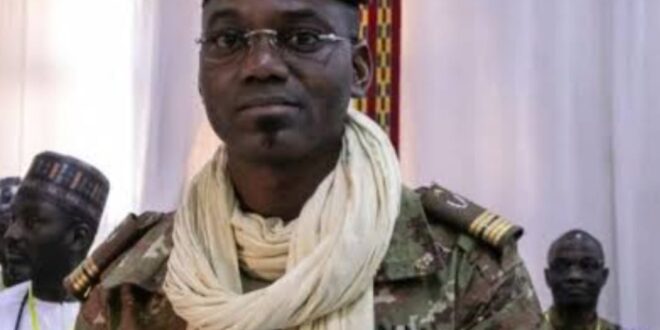
That evolution reached a dramatic turning point on April 25, 2026. In the garrison town of Kati, a suicide car bomb struck the residence of Sadio Camara, killing the Defense Minister along with members of his family. As one of the most influential figures in Mali’s ruling military leadership, his death represents more than a personal tragedy. It is a direct strike at the core of the state’s security apparatus.
The attack was not isolated. It formed part of a coordinated wave of violence targeting key national assets, including Modibo Keita International Airport and strategic towns in the north. The operation has been claimed by the al-Qaeda-linked Jama’at Nusrat al-Islam wal-Muslimin in collaboration with the Azawad Liberation Front. This convergence of jihadist and separatist forces represents a dangerous escalation, highlighting a level of coordination that challenges the capacity of the Malian state.
The implications are profound. Since the coups of 2020 and 2021, Mali’s military leadership has justified its grip on power by promising security and stability. Citizens were effectively asked to exchange democratic governance for protection. Yet the assassination of the country’s Defense Minister in a heavily secured military zone raises fundamental questions about that promise. If the state cannot protect its most senior security official, public confidence inevitably erodes.
This moment exposes a deeper structural problem. For years, peace efforts such as the Algiers Accord have been inconsistently implemented, often treated as temporary measures rather than long-term solutions. At the same time, underlying grievances related to marginalization and governance have remained largely unresolved. The reliance on military responses and external security partnerships has not addressed these root causes. Instead, it has, in some cases, hardened divisions and created space for extremist groups to expand their influence.
The result is a widening legitimacy crisis. Armed groups are not only challenging the state militarily but also exploiting its political weaknesses. The perception that leadership is disconnected from the realities on the ground fuels recruitment and sustains cycles of violence.
This is not only Mali’s problem. The events in Kati signal a broader regional risk. The Sahel is increasingly interconnected, and instability in one country quickly spills across borders. Coastal states such as Ghana, Côte d’Ivoire, Benin, and Togo are already facing growing pressure from armed groups moving southward. The scale and coordination of the recent attacks suggest a level of operational capability that should concern the entire region.
At the same time, global attention is heavily focused on conflicts in the Middle East, including tensions involving Iran. This has created a gap in international focus on African security challenges. Armed groups appear to be exploiting this distraction, expanding their operations in an environment of reduced external scrutiny.
The lesson from Bamako is not simply about security failure. It is about the limits of force as a governing strategy. Sustainable stability cannot be achieved through military means alone. It requires credible institutions, inclusive governance, and a genuine commitment to addressing long-standing grievances.
The killing of Sadio Camara is a stark reminder that no system is immune when legitimacy is weak. It underscores the need for African states to confront internal vulnerabilities with urgency and honesty. Without that effort, the cycle of violence will persist, and the cost will continue to rise.
As Mali reflects on this moment, the warning extends far beyond its borders. Instability in the Sahel is no longer contained. It is evolving, adapting, and expanding. The question is whether governments will respond by strengthening the social contract or continue relying on approaches that have repeatedly failed.
, https://www.spyuganda.com/opinion-bamakos-bloody-weekend-the-fall-of-defense-minister-sadio-collapse-of-sahelian-shield/