 pressug.com News 24 7


Related Articles


Viewers: 50,001
By Ali Lukyamuzi
The escalating tensions between the United States and Iran have once again shaken global energy markets, sending oil prices upward and exposing the fragility of fuel-dependent economies around the world. Yet nowhere is this contradiction more painful and ironic than in Africa a continent blessed with vast oil reserves but still struggling to provide affordable fuel for its own people.
As prices rise globally, millions of Africans continue enduring long queues, inflated transport costs, and soaring commodity prices, despite living in nations that produce enormous quantities of crude oil. It is a contradiction that reveals a deeper structural problem within Africa’s economic model: the continent exports raw wealth and imports refined dependency.
For decades, Africa has remained trapped in a colonial-style trade arrangement where crude oil is shipped abroad for refining, only to return as expensive petroleum products sold back to African consumers at premium prices. In the process, the continent exports jobs, industrial opportunities, and value addition while importing inflation, debt, and economic vulnerability.
Nigeria, Africa’s largest oil producer, perfectly illustrates this paradox. Despite producing millions of barrels of crude oil daily, the country has spent years relying heavily on imported fuel. In 2024 alone, Nigeria reportedly spent over $14 billion on refined petroleum imports, placing immense pressure on public finances and foreign exchange reserves.
The infamous fuel subsidy regime further worsened the crisis, forcing the government to spend trillions of Naira to stabilize pump prices while budget deficits and public debt continued to expand. Although the Dangote Refinery now recognized as the world’s largest single-train refinery has started reducing Nigeria’s fuel import dependence, the structural imbalance remains largely unresolved.
Nigeria still exports much of its crude oil to Europe and Asia, only to buy back refined fuel at a significantly higher cost. Billions are lost annually through shipping fees, insurance costs, port charges, and the continuous depreciation of the Naira against the US Dollar. The challenge is no longer simply about extracting oil; it is about building sustainable domestic refining, storage, and distribution systems capable of retaining value within African economies.
East Africa faces a similar dilemma.
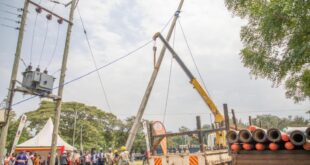
The East African Crude Oil Pipeline (EACOP), stretching approximately 1,443 kilometers from Uganda to Tanzania’s port of Tanga, has been promoted as a transformative infrastructure project. However, it has also reignited a critical debate about Africa’s development priorities.
Many citizens continue asking an uncomfortable but legitimate question: why should African oil primarily serve international markets while East Africans themselves continue grappling with high fuel prices and energy insecurity?
Today, nearly 70 percent of petroleum products consumed in East Africa are imported from the Middle East and Asia. Yet Uganda alone is expected to produce roughly 216,000 barrels of oil per day once commercial production begins. If even part of that output were refined regionally through facilities such as the proposed Hoima refinery, the East African Community could significantly reduce its dependence on imported fuel and shield itself from global price shocks triggered by conflicts abroad.
Unfortunately, regional disagreements, financing delays, and competing national interests continue slowing progress toward meaningful energy integration.
The economic consequences of this dependency are enormous. Although Africa produces approximately 8 percent of the world’s crude oil, it controls only about 2 percent of global refining capacity. This imbalance forces African countries to spend billions importing products they should be manufacturing themselves.
In 2025 alone, Africa’s collective fuel import bill surpassed $80 billion. That money represents far more than fuel expenditure. It represents lost industrialization, lost employment, weakened currencies, and missed opportunities for investment in healthcare, education, technology, and infrastructure.
Every litre of imported fuel effectively finances foreign industries while African economies remain exposed to currency instability and external geopolitical shocks.
The lesson emerging from every global energy crisis is becoming increasingly clear: energy security is national security.
Africa cannot achieve genuine economic independence while remaining dependent on foreign refineries and international shipping routes for such a strategic commodity. The continent must move beyond simply extracting crude oil and instead focus on downstream industrialization — building refineries, petrochemical industries, storage facilities, and regional supply chains that serve African markets first.
The African Continental Free Trade Area (AfCFTA) offers a historic opportunity to make this vision a reality. By reducing tariffs and strengthening intra-African trade in refined petroleum products, African countries can create a self-sustaining regional energy market capable of stabilizing prices and accelerating industrial growth.
Uganda supplying fuel to the DRC, Nigeria powering West Africa, and Angola supporting Southern Africa should become part of a deliberate continental strategy aimed at transforming Africa from a supplier of raw materials into a center of industrial value addition.
Africa possesses the resources, the market, and the strategic location to become an energy powerhouse. What has been missing is the political urgency and coordinated vision needed to break free from outdated economic structures that continue benefiting foreign economies more than African citizens.
The continent must stop functioning merely as the world’s fuel reservoir while its own people struggle to afford energy. Africa’s “black gold” should not remain a symbol of exported wealth and imported suffering. It should become the foundation upon which true economic independence, industrial transformation, and continental prosperity are built.
The writer is a lawyer, policy analyst, and thinker.
, https://www.spyuganda.com/opinion-the-great-energy-paradox-why-africa-is-drowning-in-oil-but-thirsty-for-fuel/