Eastern Democratic Republic of Congo — The reported attack by angry residents on a health facility linked to Ebola treatment efforts in eastern Democratic Republic of Congo has once again highlighted the complex intersection between public health emergencies, community trust, insecurity, and misinformation in fragile regions confronting disease outbreaks.
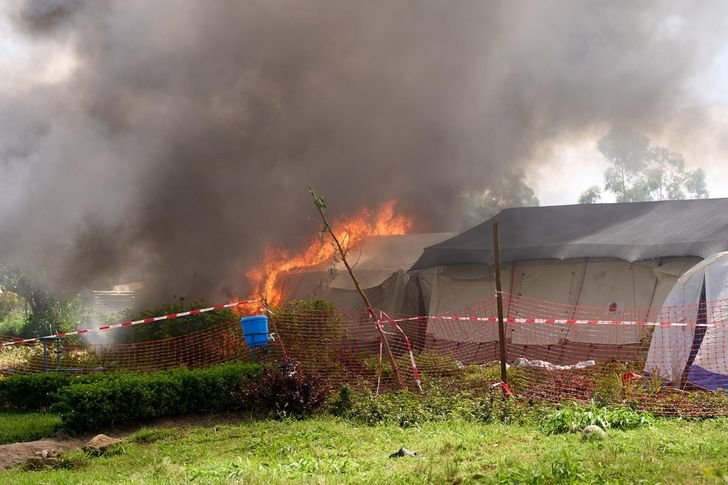
According to local health workers, residents stormed and burned a tent that formed part of an Ebola treatment and response centre in a town considered among the epicentres of the outbreak. The incident marks the second attack on Ebola-related health infrastructure within a week, raising renewed concerns over the safety of medical personnel and the sustainability of emergency response operations in the region. While authorities continue investigations into the circumstances surrounding the violence, the developments underscore a longstanding challenge that has repeatedly complicated outbreak management in parts of eastern DR Congo: the fragile relationship between affected communities and institutional health interventions during periods of crisis.
The eastern provinces of the Democratic Republic of Congo have for years experienced overlapping humanitarian pressures, including armed conflict, displacement, poverty, political instability, and weak healthcare infrastructure. Within such environments, disease outbreaks often unfold against a backdrop of public anxiety and limited confidence in state or international systems. Health experts have consistently warned that successful epidemic containment depends not only on medical treatment and surveillance, but equally on public trust and community cooperation. In many outbreak zones across Africa, fear and misinformation can spread faster than verified health information, particularly where communities already feel socially or politically marginalised. Rumours surrounding disease origins, treatment practices, or the intentions of health workers frequently intensify tensions, especially when communication gaps exist between authorities and local populations.
The attacks in eastern Congo therefore reflect more than isolated acts of anger, they reveal deeper frustrations and mistrust that can emerge when emergency interventions are perceived as externally imposed rather than community-driven. Analysts note that in fragile settings, public health responses must operate with sensitivity to local realities, cultural dynamics, and historical grievances that shape how communities interpret institutional actions. Ebola outbreaks have historically posed extraordinary challenges across Central and West Africa due to the virus’s high fatality rates and the fear associated with isolation measures, burial protocols, and movement restrictions. In several previous outbreaks, healthcare workers have themselves become targets of hostility amid public suspicion or misinformation regarding treatment centres and containment procedures.
For humanitarian organisations and health authorities, the recurring attacks present both a security concern and a strategic policy dilemma. Protective measures around treatment facilities may become necessary, yet overly militarised responses risk further deepening mistrust within communities already experiencing fear and uncertainty. Global health institutions, including the World Health Organization and regional disease control bodies, have repeatedly emphasized that epidemic response strategies must integrate community engagement as a central pillar rather than a secondary consideration. Building local partnerships with religious leaders, community elders, youth representatives, and grassroots organisations often proves essential in countering misinformation and improving acceptance of health interventions.
The situation also highlights the broader vulnerabilities facing healthcare systems in conflict-affected regions, medical personnel operating in outbreak zones frequently work under immense pressure, balancing disease containment with security risks, logistical limitations, and fragile infrastructure. Attacks on facilities not only endanger lives but can also interrupt surveillance systems, delay treatment efforts, and increase the risk of wider transmission. Across Africa, public health experts continue to caution that epidemic preparedness must extend beyond emergency medical capacity alone. Investments in public communication, local trust-building, healthcare accessibility, and institutional credibility remain equally important in strengthening resilience during future outbreaks.
For the Democratic Republic of Congo, the latest violence serves as another reminder that managing epidemics in unstable environments requires more than vaccines and treatment centres. It requires sustained efforts to bridge the gap between institutions and communities, particularly in regions where decades of insecurity have eroded confidence in authority structures. As containment efforts continue, the challenge facing health officials is not only to stop the spread of disease, but also to restore public trust in systems intended to protect lives. In outbreak management, community confidence is often as critical as medical intervention itself.