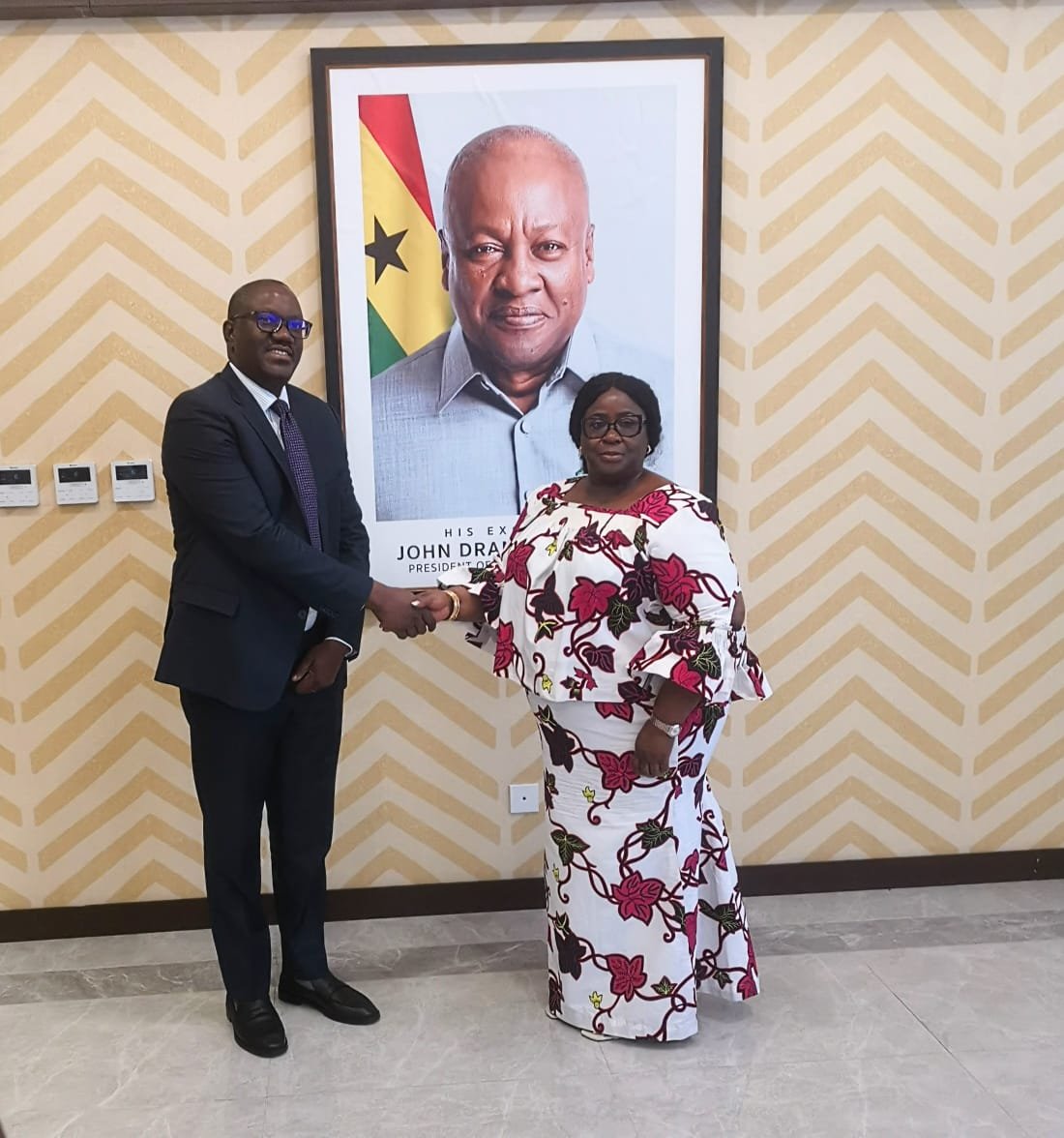
Accra, Ghana — Uganda and Ghana have reaffirmed their long-standing diplomatic ties following high-level consultations between Vincent Bagiire and Khadija Iddrisu, signaling renewed momentum in bilateral cooperation anchored in shared values and global outlook. The meeting, held at the Ministry of Foreign Affairs Ghana in Accra on 30 April 2026, unfolded in a notably cordial atmosphere, underscoring what both sides described as a relationship built on historical alignment and mutual respect. Officials familiar with the discussions indicated that the engagement went beyond routine diplomatic exchange, instead reflecting a convergence of perspectives on regional and global priorities.
At the heart of the dialogue was a recognition that Uganda and Ghana, though geographically distinct within Africa, share remarkably similar approaches to international engagement. Both countries have maintained consistent commitments to multilateralism, actively participating in platforms such as the United Nations, the African Union, and the Non-Aligned Movement. This shared institutional membership has, over time, shaped comparable diplomatic instincts favoring dialogue, consensus-building, and rules-based international order.
During the consultations, the two sides exchanged views on a range of global issues, including ongoing tensions in the Middle East, with particular reference to the situation in Gaza. While acknowledging the complexity of the conflict, both delegations emphasized the importance of peaceful resolution, humanitarian considerations, and adherence to international law. Their alignment on such matters reflects a broader African diplomatic posture that seeks to balance principled engagement with pragmatic restraint. Equally significant was the discussion on development trajectories within both countries. Uganda and Ghana, each navigating distinct but parallel economic transitions, reiterated their shared aspiration to accelerate inclusive growth while maintaining political stability. Officials highlighted the importance of leveraging diplomatic channels not only for political cooperation but also for economic advancement particularly in trade, investment, and knowledge exchange.
In this context, the meeting can be viewed as part of a wider recalibration of African diplomacy, where foreign policy is increasingly intertwined with development objectives. Uganda’s ongoing emphasis on economic and commercial diplomacy, alongside Ghana’s established role as a regional economic hub, presents opportunities for collaboration that extend beyond traditional statecraft. Analysts note that such engagements are particularly relevant at a time when African states are seeking to strengthen intra-continental partnerships while also navigating shifting global dynamics. The ability to align positions on key international issues enhances the continent’s collective voice, while bilateral cooperation provides a practical pathway for implementing shared priorities.
The Accra meeting also underscored the importance of institutional continuity in sustaining diplomatic relations. By engaging at the level of permanent secretaries and chief directors, both countries signaled a commitment to maintaining steady, professional dialogue that transcends political cycles. This approach is often seen as essential for ensuring that bilateral agreements and understandings are translated into actionable outcomes. Beyond policy discussions, the tone of the meeting itself carried symbolic weight. In diplomatic practice, the quality of engagement measured through openness, mutual respect, and clarity of purpose can be as significant as the substantive issues addressed. In this instance, both delegations appeared keen to reinforce not only the content of their cooperation but also the spirit in which it is conducted.
Looking ahead, there is potential for the Uganda–Ghana relationship to expand into more structured areas of collaboration. These may include joint initiatives within multilateral forums, coordinated positions on global governance reforms, and increased exchange in sectors such as education, technology, and cultural diplomacy. For both countries, the engagement in Accra serves as a reminder that Africa’s diplomatic landscape is increasingly defined by partnerships grounded in shared experience and common ambition. As global uncertainties persist, such relationships offer a degree of stability and predictability, enabling states to navigate challenges with a measure of collective strength. Ultimately, the meeting between Vincent Bagiire and Khadija Iddrisu reflects a broader narrative within African diplomacy one that emphasizes alignment over divergence, cooperation over competition, and a sustained commitment to shaping outcomes both within the continent and on the global stage.