 pressug.com News 24 7

Related Articles

By Ben Musanje
The Uganda Law Society has launched a Shs2.301 billion “Sovereignty Defense Fund” aimed at mounting a nationwide legal and civic challenge against the newly assented Protection of Sovereignty Act, 2026, which the lawyers’ body describes as a major threat to constitutional freedoms, democracy and the rule of law.
Addressing journalists at the ULS headquarters in Kololo on Thursday, the Vice President of the Uganda Law Society, Anthony Asiimwe, said the legal fraternity could not remain silent after Parliament passed the controversial law on May 5 and President Yoweri Museveni assented to it.
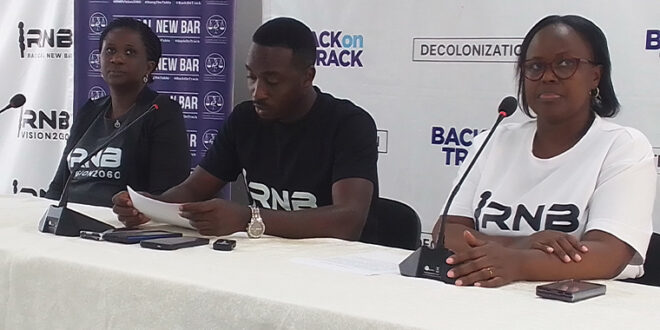
Asiimwe, flanked by ULS Chief Executive Officer Christine Awori and Head of Rule of Law Audrey Apio, declared that the organization would spearhead what he called a “measured, professional and lawful defense of the Constitution.”
“We are saying sovereignty belongs to the people, and so we must defend the sovereignty of the people,” Asiimwe said.
He argued that although every democracy has laws regulating foreign influence and lobbying, the new legislation goes far beyond reasonable regulation and instead introduces broad criminal penalties capable of targeting ordinary Ugandans, journalists, lawyers, civil society organizations and even families receiving money from abroad.
Citing Article 1 of the Constitution, Asiimwe maintained that all power belongs to the people and warned that the law undermines the very sovereignty it claims to protect.
“The bill bearing the name sovereignty now threatens the very people in whom that sovereignty rests,” he said.
According to Asiimwe, the legislation contains vague provisions that could criminalize routine international engagements, donor-funded activities and cross-border professional relationships.
He warned that journalists working with international media organizations, non-governmental organizations operating on donor support and Ugandans receiving Diaspora remittances could all potentially become targets of prosecution.
In one example, Asiimwe said a journalist filing stories for an international wire service or merely communicating with a foreign editor could face criminal sanctions. He added that NGOs running health projects funded by foreign grants risk closure, while lawyers representing foreign clients may find themselves trapped between professional obligations and possible prosecution.
He further cautioned that ordinary citizens engaged in lawful international partnerships, including pastors, teachers and youth leaders, could also be swept up by investigations under the law.
“We have seen laws of this design in other parts of the world. They begin narrow, but they never stay narrow,” Asiimwe warned.
The ULS vice president also raised concerns about the economic implications of the law, saying Uganda’s economy heavily relies on Diaspora remittances, donor-funded programmes and foreign investment.
He noted that Uganda receives an estimated US$2.5 billion annually in Diaspora remittances which support families through school fees, housing and healthcare.
According to him, uncertainty created by the law could trigger capital flight, suspension of donor programmes and lengthy legal disputes.
“The cost of doing nothing will far exceed the Shs2.301 billion we are raising,” he said.
Asiimwe outlined how the fund would be spent, saying Shs266 million would go towards public education campaigns through radio, television, print media and national dialogues to help citizens understand the implications of the law.
He argued that many Ugandans often find themselves in conflict with laws they barely understand due to limited public sensitization.
Another Shs550 million, he said, would support coalition building and Diaspora coordination by bringing together legal, civic and economic actors both within and outside Uganda.
The ULS also earmarked Shs78 million for high-level advocacy targeting institutions such as Parliament, the Presidency, the East African Community, the African Commission and diplomatic missions.
However, the largest share of the fund, about Shs1.22 billion, will finance litigation and victim support, including constitutional petitions and regional legal actions.
Part of this allocation, Asiimwe said, will establish a Shs400 million legal aid fund to support journalists, activists, editors and ordinary citizens who may face prosecution under the new law.
He drew parallels with the Computer Misuse Amendment Act, which the Uganda Law Society challenged in court.
According to Asiimwe, the Constitutional Court took more than four years to nullify parts of that law, during which many Ugandans were prosecuted and some imprisoned without adequate legal defense.
“As I speak, some people who were convicted under that law are still serving sentences even after the court decision,” he said.
He also criticized delays within the judiciary, saying constitutional matters touching on fundamental freedoms often take too long to be resolved.
The ULS President, Isaac Ssemakadde, signed the official position paper issued on May 14, 2026, reaffirming the organization’s commitment to challenging the law.
Asiimwe said the Uganda Law Society had opposed the bill from the moment it was tabled before Parliament and accused legislators of ignoring overwhelming public criticism during consultations.
He claimed that nearly all stakeholders who appeared before Parliament’s Legal Affairs Committee rejected the proposed law, including some government institutions such as the Bank of Uganda.
“We told the public from the beginning that this bill should not see the light of day because we understood the implications it would have on democracy, the rule of law and constitutional freedoms,” he said.
Meanwhile, ULS Secretary Ssali Babu urged Ugandans not to view the Sovereignty Defense Fund as charity but rather as a collective effort to defend constitutional rights.
“This is not money going into the coffers of the Uganda Law Society for daily operations. It is money meant for the defense of the sovereignty of the Republic of Uganda,” Babu said.
He added that the law had faced unprecedented rejection during consultations before Parliament, claiming that about 96 percent of stakeholders opposed it.
“This is probably the most rejected bill by stakeholders before the Parliamentary Committee on Legal Affairs,” he said.
Babu insisted that the widespread opposition reflected deep public dissatisfaction and justified the need for a legal challenge.
“The ball is now in the hands of the public to ensure this Act is challenged in court and conclusively rejected,” he added.
The Uganda Law Society said the fund will be independently audited and subjected to regular public reporting to ensure accountability.
Asiimwe appealed to Ugandans both at home and abroad to contribute whatever they can towards the campaign.
“Every shilling counts. Whether it is Shs1,000 or Shs10,000, it is about defending your future, your freedom and your community,” he said. (For comments on this story, get back to us on 0705579994 [WhatsApp line], 0779411734 & 041 4674611 or email us at mulengeranews@gmail.com).
Post Views: 679
, https://mulengeranews.com/uls-launches-shs2-3-billion-sovereignty-defense-fund-to-fight-sovereignty-law/