 pressug.com News 24 7

Related Articles



By Ben Musanje
Prime Minister Robinah Nabbanja has indicated that the recently approved UGX 200 excise duty increment on fuel per liter will be reconsidered by the next government, signaling a possible shift in one of the most debated tax measures in Uganda’s 2026/2027 national budget.
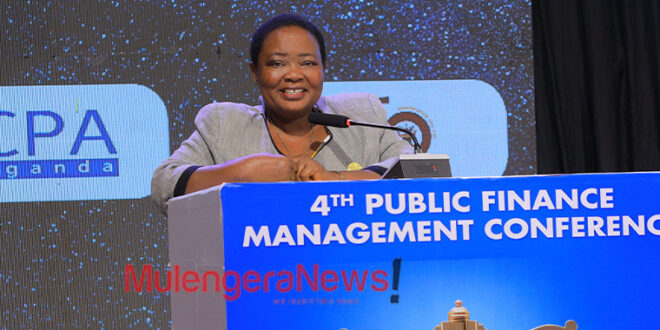
Speaking at the official opening of the three days’ Fourth Public Finance Management Conference organized by the Institute of Certified Public Accountants of Uganda (ICPAU) at Imperial Resort Beach Hotel, Prime Minister Robinah Nabbanja acknowledged concerns raised by stakeholders over the fuel tax increase but emphasized that procedural constraints limit immediate changes. She noted that the Eleventh Parliament had already passed the budget, leaving only a few administrative steps before implementation, and any revisions would require a formal process involving Cabinet and Parliament under a new government term.
The tax measure, approved under the Excise Duty (Amendment) Bill, 2026, will raise the cost of both petrol and diesel by UGX 200 per litre starting July 1, 2026. Government projects the increment will generate approximately UGX 450 billion in additional domestic revenue to support the country’s UGX 84.3 trillion budget, the largest in Uganda’s history. Despite this, the proposal has drawn criticism from sections of the private sector and financial experts who argue it could increase the cost of living and strain economic activity.
Prime Minister Nabbanja used the platform to underscore the broader fiscal challenges facing Uganda, pointing to a tax-to-GDP ratio of about 13 to 14 percent, which remains below the regional benchmark of 16 to 18 percent. She stressed the need for sustainable and equitable revenue mobilization, noting that expanding the tax base while maintaining fairness is critical for long-term economic stability.
The conference brought together accountants, policymakers, and financial experts to assess Uganda’s public finance management systems amid global economic uncertainty, tightening international financing conditions, and increasing fiscal pressures. Prime Minister Robinah Nabbanja highlighted that effective public finance management remains central to Uganda’s ambition of growing its economy from 61.3 billion US dollars in 2025 to 500 billion US dollars by 2040 under the National Development Plan framework.
President of the Institute of Certified Public Accountants of Uganda CPA Timothy David Ediomu Ediomu raised concerns about the potential unintended consequences of recently passed Protection of Sovereignty Bill, indicating that while government intentions may be well-meaning, implementation approaches must be carefully calibrated to avoid disrupting financial systems. He pointed to the need for adjustments where policies risk constraining money flow and economic stability, emphasizing that existing safeguards within the banking system already provide significant oversight on financial transactions.
The discussions also highlighted the evolving role of digital financial systems in Uganda’s economy. Dr. Michael Kizito, Lecturer School of Computing and Information Technology at Makerere University, emphasized the transformative impact of mobile money and financial technologies in expanding financial inclusion, particularly among rural populations. He noted that digital platforms have simplified transactions ranging from school fees to healthcare payments, reducing reliance on traditional banking systems and improving efficiency across sectors.
Prime Minister Robinah Nabbanja further called on accounting officers and finance professionals to uphold high standards of integrity and transparency, describing them as central to ensuring accountability in public resource management. She emphasized the importance of strengthening internal audit functions and aligning financial reporting with professional standards to enhance public trust and improve decision-making.
As Uganda continues to implement reforms such as the Integrated Financial Management System, the Treasury Single Account, and program-based budgeting, the debate around the fuel tax underscores the balancing act between increasing domestic revenue and safeguarding economic stability. The indication that the next government could revisit the tax offers a potential opening for further policy adjustments as stakeholders continue to push for a more measured approach to fiscal reforms. (For comments on this story, get back to us on 0705579994 [WhatsApp line], 0779411734 & 041 4674611 or email us at mulengeranews@gmail.com).
Post Views: 235
, https://mulengeranews.com/nabbanja-signals-possible-review-of-ugx-200-fuel-tax-at-icpaus-4th-pfm-conference-opening/