 pressug.com News 24 7

Related Articles

Viewers: 200,001
By Spy Uganda
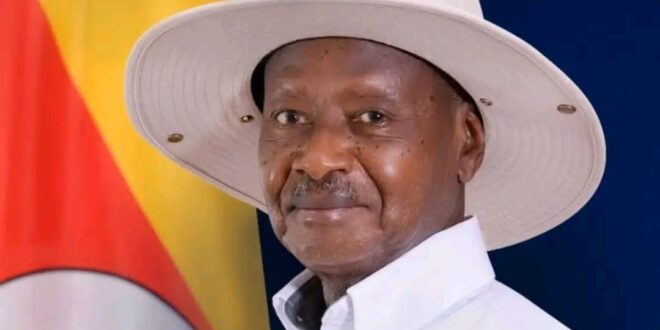
KAMPALA, Uganda — President Yoweri Kaguta Museveni has officially been sworn in for his seventh elected term as President of the Republic of Uganda, extending his uninterrupted stay in power to four decades since capturing leadership in 1986 after a five year guerrilla war.
The inauguration ceremony, held Tuesday at Kololo Ceremonial Grounds, was presided over by Chief Justice Flavian Zeija, who administered the presidential oath before thousands of dignitaries, diplomats, security officials, religious leaders and supporters.
During the ceremony, Museveni pledged to protect and defend Uganda’s Constitution while promising to intensify the fight against corruption, strengthen security and continue pursuing economic transformation.
“I, Yoweri Kaguta Museveni, swear in the name of the Almighty God that I shall faithfully execute the functions of the President of the republic of Uganda,” Museveni declared while taking the oath of office.
The event featured military drills, cultural showcases and the attendance of regional leaders as Museveni officially commenced another five-year mandate, from 2026 to 2031.
Although this marks Museveni’s seventh elected term under Uganda’s electoral system introduced in 1996, his total period in power now stretches to 40 years, having first assumed office on January 26, 1986 untill 1996 when the first election was conducted.
From “Fundamental Change” To Four Decades In Power
When Museveni’s National Resistance Army (NRA) captured Kampala in 1986, he famously announced that Uganda was witnessing “not a mere change of guards, but a fundamental change.”
At the time, the country was emerging from years of coups, civil conflict, economic breakdown and state instability under previous governments.
Museveni promised Ugandans a new era built on democracy, discipline, national unity, economic recovery and elimination of corruption.
His administration initially gained praise for restoring relative stability, reviving the economy and rebuilding state institutions after years of turmoil.
However, critics argue that several of those early promises remain unfulfilled, particularly in the fight against corruption which the president has repeatedly prioritized throughout his presidency.
The Endless War Against Corruption
In nearly every inauguration speech and State of the Nation address over the years, Museveni has described corruption as one of Uganda’s biggest obstacles to development.
Even during his latest swearing-in speech, the President again emphasized the need to eliminate theft of public resources and improve accountability.
Yet despite decades of anti-corruption campaigns, Uganda continues facing recurring scandals involving billions of taxpayers’ money lost through inflated contracts, ghost workers, procurement fraud and abuse of office.
Over the years, Museveni’s government has established numerous institutions to combat corruption, including:
• State House Anti-Corruption Unit• Inspectorate of Government (IGG)• Auditor General’s Office• Criminal Investigations Directorate (CID)• Anti-Corruption Court• COSASE parliamentary committee• Investors Protection Unit• RDC monitoring structures• PPDA and other accountability agencies
The government has also introduced multiple directives and reforms such as electronic payroll systems, wealth declaration requirements, procurement monitoring and anti-corruption hotlines.
Despite these interventions, corruption continues surfacing across various ministries and government departments (MDAs).
Why The Problem Persists
Political analysts say the continued existence of corruption despite the many institutions reflects deeper governance and systemic challenges.
Some experts point to political interference, selective prosecution, weak institutional independence and entrenched patronage networks within government structures.
Others argue that the multiplication of anti-corruption agencies has instead increased public expenditure while creating overlapping responsibilities with limited tangible results.
Critics further contend that lower-ranking officers are often prosecuted while individuals with political influence remain protected from meaningful accountability.
”Irumba, take an example of Iron sheets thuggery, poor Nandutu (Mukene) is in Luzira while [Tilapias] are even conducting president’s swearing in. Imagine thieves conducting the swearing in of a man promising to come and fight corruption!,” one analyst on condition of anonymity told our Spy via WhatsApp chat.
As Museveni begins his seventh elected term, many Ugandans are once again waiting to see whether the renewed promises to fight corruption will finally produce lasting reforms or remain part of a cycle of repeated commitments that dates back to the “fundamental change” declaration of 1986.Here at TheSpy Uganda 🇺🇬 , we congratulate you H.E Excellency for taking another term in office.
, https://www.spyuganda.com/museveni-sworn-in-for-seventh-term-renewing-anti-corruption-pledge-amid-lingering-doubts/
