 pressug.com News 24 7

Related Articles


Viewers: 50,004
By Spy Uganda
Every time tragedy strikes the Democratic Republic of Congo, the world suddenly remembers the country exists.
Cargo planes land. International press conferences begin. Western governments announce millions of dollars in emergency funding. Aid agencies flood television screens wearing branded jackets and speaking the language of humanitarian urgency.
Then the cycle repeats itself.
Congo remains poor. Its people remain displaced. Its minerals continue leaving the ground. And foreign powers continue positioning themselves as rescuers in a crisis they have spent decades benefiting from.
The latest Ebola outbreak in eastern Congo has once again triggered a familiar global response. The European Union has dispatched medical supplies. The United States has announced tens of millions of dollars in additional aid. International organizations are expanding operations across affected regions.
On paper, it sounds compassionate.
But ordinary Congolese citizens have every right to ask a painful question: how much of this money actually reaches the people suffering on the ground?
For decades, Congo has become the perfect theatre for international humanitarianism, a country rich enough to attract global interest, but unstable enough to justify endless foreign intervention, aid dependency, military presence, and NGO expansion.
The numbers are staggering.
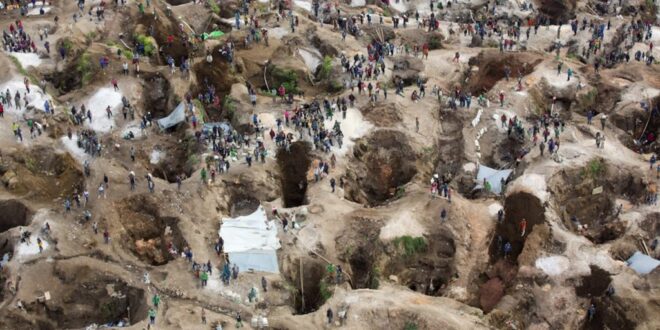
The DRC possesses some of the world’s most valuable reserves of cobalt, coltan, gold, copper, lithium, and rare earth minerals that power the global technology economy. The phones, electric vehicles, batteries, and digital infrastructure driving modern civilization are deeply tied to Congolese soil.
Yet the people living above those minerals remain among the poorest on earth.
Eastern Congo has become a permanent emergency zone where conflict, disease outbreaks, displacement, and foreign-backed instability seem to coexist conveniently alongside one of the greatest mineral extraction systems in modern history.
That contradiction cannot be ignored.
Every humanitarian crisis in Congo eventually becomes profitable for someone.
Security contractors benefit. Aid organizations expand budgets. International agencies secure funding. Foreign mining interests continue operating. Political actors gain leverage. Regional powers reposition themselves strategically.
Meanwhile, the ordinary Congolese villager remains trapped between armed groups, disease, poverty, and displacement camps.
This is why many Africans increasingly view the humanitarian industry in Congo with skepticism.
The concern is not that Ebola is unreal or that medical support is unnecessary. Disease outbreaks are serious public health threats that deserve urgent response. The deeper frustration is the perception that the international system responds more aggressively to protecting global interests than to transforming Congolese lives.
For years, billions of dollars have flowed through Congo in the name of peacekeeping, humanitarian response, stabilization, and development. Yet eastern Congo remains one of the most militarized and unstable regions in the world.
Why?
Because instability in Congo has become internationally manageable rather than politically unacceptable.
The world has learned to operate around Congolese suffering instead of solving it.
Even the language surrounding these crises often reveals uncomfortable realities. Entire communities are relocated, controlled through emergency systems, or placed under strict movement restrictions in the name of security and containment. Yet those same populations rarely see meaningful investment in hospitals, infrastructure, schools, clean water, or local economic empowerment once the cameras disappear.
Sympathizers often appear to benefit more consistently than victims themselves.
Aid conferences generate headlines. Donor nations earn moral credibility. NGOs secure operational relevance. But the displaced Congolese family living near conflict zones frequently remains exactly where they were years earlier, vulnerable, poor, and dependent.
And while humanitarian language dominates international coverage, another reality quietly continues in the background: the extraction of Congo’s strategic resources never truly stops.
That is why many Africans no longer separate humanitarian politics from economic interests.
To them, Congo represents the unfinished story of colonialism in modern form.
The flags changed. The language became softer. The methods became more sophisticated. But the underlying structure remains painfully familiar: a resource-rich African country trapped in permanent instability while external actors continue benefiting from its weakness.
Today the tools are no longer direct colonial administrations. They are debt systems, multinational extraction networks, geopolitical competition, security arrangements, and humanitarian economies that can sometimes normalize endless crisis instead of ending it.
That is the uncomfortable conversation many global powers prefer to avoid.
Of course, medical workers risking their lives on the ground deserve respect. Doctors, nurses, and emergency responders are not the enemy. Many are doing genuinely dangerous and compassionate work under impossible conditions.
But humanitarianism should never become a shield that prevents legitimate political questions.
Why does Congo remain perpetually broken despite decades of international involvement?
Why does one of the world’s richest mineral nations remain trapped in cycles of war, displacement, and dependency?
Why do emergency responses always arrive faster than structural justice?
Until those questions are honestly confronted, many Africans will continue viewing every new crisis response with suspicion.
Because to far too many people across the continent, Congo no longer looks like a country being rescued.
, https://www.spyuganda.com/opinion-dear-usa-stop-hiding-behind-ebola-while-exploiting-drcongos-wealth/