 pressug.com News 24 7

Related Articles



Adjumani District is grappling with growing fears over rabies after two children reportedly died following dog bites in Itirikwa and Pakele sub-counties, amid a prolonged shortage of anti-rabies vaccines in government health facilities.
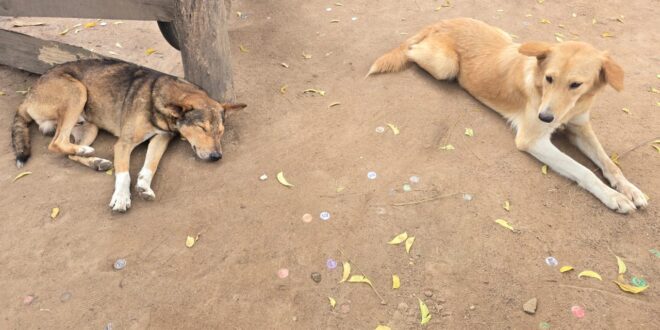
The deaths have triggered calls from residents and local leaders for urgent government intervention to restore vaccine supplies, strengthen rabies prevention programmes and address the growing population of stray dogs in communities.
Charles Edema Drabe, the LC I Chairperson of Aliwara Village, said stray dog attacks had become increasingly common in the area.
“During a recent community meeting, a stray dog attacked seven people in the morning hours. Fortunately, all the victims received anti-rabies treatment and recovered,” Drabe said.
He, however, said two children from Aliwara Village in Itirikwa Sub-county and neighbouring Leanguru Village in Pakele Sub-county were not as fortunate.
“We have lost two children after they were allegedly bitten by dogs. This is heartbreaking, and government must intervene before more lives are lost,” he said.
Residents said the two children were rushed to nearby government health facilities after the attacks, but anti-rabies vaccines were unavailable. Their families reportedly could not obtain the medicine from private facilities because of its high cost and limited availability.
Caesar Ingavure, a resident of Aliwara Village who lost his son to a suspected rabies infection last year, said many families in the area cannot afford the treatment.
“My son could have been saved if the anti-rabies vaccine had been available at the government health facility. Most families here cannot afford to buy the vaccine from private clinics,” Ingavure said.
He appealed to the Ministry of Health to ensure a consistent supply of anti-rabies vaccines in health facilities across the district.
Adjumani Resident District Commissioner Swaib Toko acknowledged receiving complaints from communities about rising cases of dog bites.
“I have already submitted a report to the relevant authorities regarding the shortage of anti-rabies vaccines and the rising cases of dog bites. We hope the latest consignment of medicines supplied by government will include the vaccines,” Toko said.
He urged residents to seek medical attention immediately after being bitten by a dog.
“If one government health facility does not have the vaccine, patients should immediately seek treatment from another public health facility where it may still be available. Rabies is preventable if treated early,” he advised.
The Adjumani District Health Officer confirmed that the district was facing a shortage of anti-rabies vaccines due to increased demand.
“We have repeatedly raised this challenge during district management meetings. The demand for anti-rabies vaccines has increased, yet supplies remain inadequate,” the health officer said.
He also called on the district production department to strengthen efforts to control stray dogs.
“Controlling stray dogs is an important public health intervention because they continue to pose a serious risk to communities,” he said.
Adjumani District Production Officer Godfrey Mamawi Ambayo said the district had not received government supplies of anti-rabies vaccines for nearly two years, despite previous quarterly deliveries.
“Government used to supply anti-rabies vaccines quarterly, but we have gone for almost two years without receiving any stock. This has affected our vaccination programme,” Ambayo said.
He said the district had intensified public awareness campaigns on rabies prevention and response to dog attacks.
“We are conducting massive sensitisation on rabies prevention. We are also targeting hotspot areas where stray dogs are common. So far, about 70 stray dogs have been killed to reduce the risk of attacks,” he said.
Ambayo added that the district was considering procuring vaccines from the open market to restart dog vaccination campaigns.
“We are considering buying vaccines from the open market so that we can start vaccinating dogs again and reduce the spread of rabies,” he said.
Adjumani District LC5 Chairperson John Anyanzo Ambayo pledged to engage relevant stakeholders to address the public health concern.
“We cannot continue losing lives to a preventable disease. I will engage the Ministry of Health, district leaders and other stakeholders to ensure anti-rabies vaccines are made available and measures are put in place to control stray dogs,” Anyanzo said.
The suspected deaths have renewed pressure on authorities to restore anti-rabies vaccine supplies and strengthen rabies control measures to prevent further loss of life.
, https://nilepost.co.ug/health/357458/two-children-die-of-suspected-rabies-as-adjumani-faces-vaccine-shortage