 pressug.com News 24 7

Related Articles
By Ben Musanje
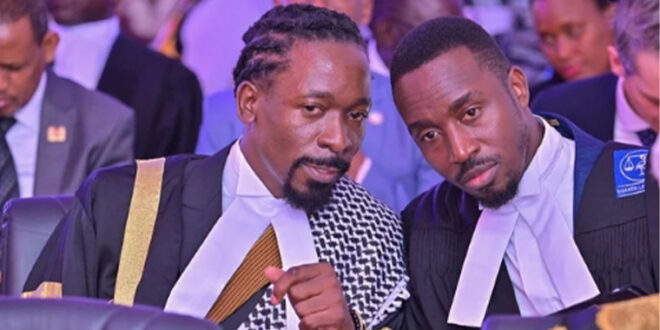
The Uganda Law Society (ULS) has called on the government to lift the interdiction of Principal Road Safety Officer Ronald Amanyire, saying his expertise is urgently needed to address the country’s worsening road safety crisis following a series of fatal road crashes that have claimed dozens of lives over the past 10 days.
In a statement released on Saturday, the Society’s Vice President Anthony Asiimwe also proposed sweeping road safety reforms, arguing that Uganda must move beyond what it described as “performative” responses and instead confront the systemic failures responsible for the growing number of road deaths.
The ULS said reinstating Amanyire would allow one of the country’s experienced road safety professionals to contribute meaningfully to national efforts aimed at reducing road crashes and improving enforcement of traffic safety measures.
Background on Amanyire
Amanyire was interdicted by the Ministry of Works and Transport in May this year over allegations of leaking internal government documents, insubordination and running what the ministry described as a social media campaign against government programmes.
In an April 30 interdiction letter signed by Permanent Secretary Bageya Waiswa, the ministry accused Amanyire of conduct “inconsistent with your position as Principal Road Safety Officer.”
The letter further alleged that he used his X account, @amronaldo, to publish official and internal government information and documents without the explicit permission of the responsible officer.
While the allegations remain under investigation, the Uganda Law Society argued that Amanyire’s technical expertise should be harnessed to support the country’s road safety agenda amid the increasing number of fatal crashes.
Why the ULS is making the call
The Society’s appeal follows what it described as Uganda’s “Bloody Ten Days,” during which the country witnessed a series of devastating but preventable road crashes that claimed scores of lives, including school children.
The accidents began on July 7 at Bobi Trading Centre in Omoro District along the Kampala-Gulu Highway, where an Opit Travellers bus collided head-on with a trailer, killing 14 people and injuring 28 others.
On July 10, a school bus collided with a train at a railway crossing in Mukono District, leaving one person dead and several others injured.
Four days later, another school bus rammed into a stationary trailer along the Mbale-Iganga Highway in Bugweri District, killing the driver and injuring 15 passengers, many of them students.
The deadliest incident occurred on July 16 at Chekwatit Hill in Kapchorwa District, where a King David Junior School bus overturned, killing at least 25 pupils together with the school’s founder and director, while dozens of others sustained injuries.
“It is with profound sorrow and a heavy heart that the Uganda Law Society mourns the devastating loss of innocent lives in a series of tragic road accidents over the past ten days,” the Asiimwe said, extending condolences to bereaved families and wishing the injured a speedy recovery.
Alarming road crash statistics
Asiimwe said the recent tragedies are part of a much larger national road safety crisis.
According to the Uganda Police Annual Crime Report released in March this year, 5,383 people died on Uganda’s roads in 2025, representing an average of about 15 deaths every day. The figure rose from 5,144 deaths in 2024, 4,806 in 2023, and 4,534 in 2022, reflecting a worrying upward trend.
The Society said highways such as the Kampala-Gulu road have repeatedly become scenes of fatal crashes, while recent accidents involving school buses demonstrate that even educational journeys are no longer safe.
“This is not mere misfortune. It is the cumulative result of systemic challenges that demand urgent, decisive leadership,” Asiimwe said, attributing the fatalities to weak enforcement of traffic laws, reckless driving, unroadworthy vehicles, inadequately protected railway crossings and gaps in accountability.
Reforms proposed
To reverse the trend, the ULS called for an immediate nationwide inspection and impounding of all unroadworthy public transport and school vehicles, alongside stricter licensing and maintenance standards.
The Society also urged government to rigorously enforce speed governors, regulate drivers’ working hours, strengthen sobriety checks and increase traffic policing on major highways using technology and visible enforcement.
It further recommended securing all railway crossings through the installation of barriers, improved signage, lighting and deployment of dedicated personnel to prevent collisions.
Besides calling for Amanyire’s reinstatement, the ULS proposed a comprehensive public audit of road safety budgets, infrastructure maintenance and emergency response capabilities, saying transparency would help restore public confidence in road safety interventions.
It also appealed for timely compensation, medical treatment and psychosocial support for victims of road crashes and their families.
Wider context
Asiimwe criticized the government’s recent decision to suspend all school trips following the spate of accidents, describing the directive by the acting Minister of Education and Sports as a “kneejerk, performative panacea” that punishes schools and learners without addressing the root causes of road carnage.
Instead, the ULS argued that sustainable road safety can only be achieved through comprehensive reforms targeting vehicle standards, road infrastructure, law enforcement and accountability.
Asiimwe also noted that Minister of Justice and Constitutional Affairs Norbert Mao, accompanied by a ULS delegation representing President Isaac Ssemakadde, visited survivors of the Opit Travellers bus crash at St. Mary’s Hospital Lacor on July 17, where they offered condolences to bereaved families and support to those injured.
The Society said it remains committed to working with government and other stakeholders to ensure lasting reforms that prioritize the safety of all Ugandans.
“The blood on our roads must spur unified action—not division. Every Ugandan child, parent and traveller deserves to journey in safety,” the statement said, urging government to seize the moment to implement lasting road safety reforms before more lives are lost. (For comments on this story, get back to us on 0705579994 [WhatsApp line], 0779411734 & 041 4674611 or email us at mulengeranews@gmail.com).
Post Views: 578
, https://mulengeranews.com/uls-calls-for-lifting-of-amanyires-interdiction-proposes-comprehensive-road-safety-reforms-as-it-mourns-bloody-ten-days-victims/