 pressug.com News 24 7

Related Articles

×
“You shall have no other gods before me.” Exodus 20:3
In recent months, Uganda has heard language that should alarm every believer. The Speaker of Parliament equated the President to “God the Father” and his son to “the Son.” The First Son repeatedly refers to himself, his father, and others as Bachwezi on social media. And a thanksgiving at Kololo, organized by Pastor Patience Rwabwogo Museveni and later postponed, planned for all attendees to wear white — the very color attributed to Bachwezi spirits in emandwa worship across Uganda.
This is not new. Owobusobozi Bisaka’s followers wear white. Traditional worshippers across Africa wear white to invoke ancestral spirits, river gods, and “divine” mediums. White is the uniform of spirit worship. When a Christian gathering adopts the same symbol, we are mixing altars.
As church leaders, we cannot stay silent. The question facing us is urgent: Can you be a Muchwezi and a Christian?
The answer is no. And Scripture tells us why.
Understand what “Muchwezi” means
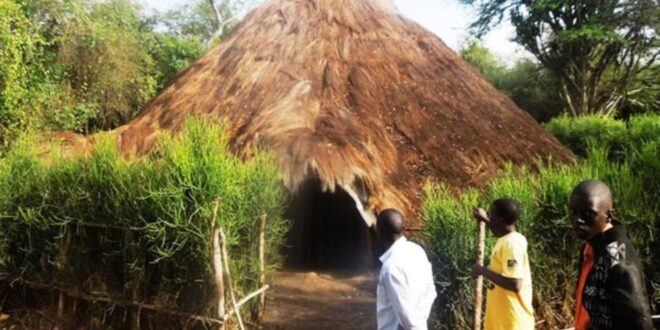
Historically, the Bacwezi were the rulers of the ancient Kitara empire. They were human kings. But spiritually, the word Omuchwezi today carries a different weight. It means demi-god, semi-divine, spirit-medium, or superhuman. It refers to emandwa — ancestral spirits that people consult through mediums for power, healing, and protection.
The Bible is clear on this. “For there is one God, and one mediator between God and mankind, the man Christ Jesus.” 1 Timothy 2:5. There is no space for a second mediator. No space for a semi-divine class of people. God says, “I am the LORD; that is my name! I will not yield my glory to another or my praise to idols.” Isaiah 42:8. To claim the title Muchwezi in the spiritual sense is to claim a status that belongs to Christ alone.
The Old Testament also warns us directly: “Let no one be found among you who practices divination or sorcery, interprets omens, engages in witchcraft, or casts spells, or who is a medium or spiritist or who consults the dead.” Deuteronomy 18:10-11. Emandwa worship is consulting the dead. You cannot follow Christ and consult the dead.
Recent events are blurring the line between God and man
When a national leader is called “God the Father,” that is blasphemy. When another is called “the Son,” that steals the title of Jesus Christ, the only begotten Son of God. Acts 4:12 says, “Salvation is found in no one else, for there is no other name under heaven given to mankind by which we must be saved.” That name is Jesus — not any political figure.
Bible the spiritual book used by christians
When public figures tweet “I am Muchwezi,” they are aligning themselves with emandwa. Paul warns the Corinthian church, “the sacrifices of pagans are offered to demons, not to God, and I do not want you to be participants with demons.” 1 Corinthians 10:20. You cannot drink the cup of the Lord and the cup of demons too. 1 Corinthians 10:21.
The planned thanksgiving at Kololo matters because of the symbolism. White is not neutral. It is the color of Bachwezi shrines. It is what Bisaka’s Faith of Unity wears. It is what traditional priests from Bunyoro to Buganda to West Africa wear when they call on spirits. When the Church copies the dress code of spirit worship, we send a message: “We serve the same powers.” God rejected King Saul when he mixed God’s instruction with his own religious ideas. 1 Samuel 15:22-23. We can thank God for peace. We can pray for leaders. 1 Timothy 2:1-2. But we cannot borrow rituals from emandwa and call it Christian worship.
The Church has no superhumans — only a body
The New Testament destroys the idea of spiritual elites. Paul teaches, “The eye cannot say to the hand, ‘I don’t need you!’” 1 Corinthians 12:21. There are no Bachwezi in the body of Christ. There are only brothers and sisters. Pastors, presidents, market vendors, and boda riders are all “jars of clay” so that the power is seen to be from God and not from us. 2 Corinthians 4:7.
God consistently chooses the ordinary. He chose David the shepherd boy, not Goliath the giant. He chose Mary from the village of Nazareth, not the daughter of Caesar. “God chose the weak things of the world to shame the strong.” 1 Corinthians 1:27. The moment we start calling a man superhuman, we stop needing God. The Church bows to one name only: “that at the name of Jesus every knee should bow.” Philippians 2:10. Not at the name of any Muchwezi. Not at the name of any political family.
A word to leaders and to the Church
To leaders: Humility is your protection. King Herod accepted worship as a god and “was eaten by worms and died.” Acts 12:21-23. King Nebuchadnezzar boasted about his kingdom and lived like an animal until he acknowledged that Heaven rules. Daniel 4:30-33. If people call you Muchwezi, correct them. If they call you God, rebuke them like Paul and Barnabas did at Lystra. Acts 14:14-15.
To the Church: We are not Bachwezi. We are saints — made holy by the blood of Jesus. 1 Peter 2:9. Our power does not come from ancestors. It comes from the Holy Spirit. “You will receive power when the Holy Spirit comes on you.” Acts 1:8. Our covering is not white robes borrowed from traditional worshippers. Our covering is the righteousness of Christ. Isaiah 61:10. Africa has many gods and many altars. But we serve one Lord. 1 Corinthians 8:5-6.
To Uganda: “How long will you waver between two opinions? If the LORD is God, follow him; but if Baal is God, follow him.” 1 Kings 18:21. Political loyalty cannot replace spiritual salvation. Cultural pride cannot replace the cross of Christ.
Choose your identity
You can be Ugandan and Christian. You can be Munyankole and Christian. You can be a leader and Christian. But you cannot be Muchwezi and Christian. One claims divinity. The other worships Divinity. One trusts ancestral spirits. The other is filled with the Holy Spirit. One exalts man. The other exalts Christ.
“As for me and my house, we will serve the LORD.” Joshua 24:15. Let the Church remain the Church — a body of ordinary people, saved by an extraordinary God. No demi-gods. No superhumans. No white robes from the shrine. Just sinners saved by grace, clothed in Christ, walking in the power of the Holy Spirit.
Share if you believe: Jesus Christ alone is Lord over Uganda.
The above opinion was written by Godfrey Tinka
, https://eastafricanwatch.net/can-you-be-a-muchwezi-and-a-christian-an-opinion-of-godfrey-tinka/?utm_source=rss&utm_medium=rss&utm_campaign=can-you-be-a-muchwezi-and-a-christian-an-opinion-of-godfrey-tinka